Surface Cleaner Pressure Washing and How It Works
A dirty driveway or patio can make an otherwise well cared for property look tired. Rain, mud, moss, algae, traffic dirt, food stains and general outdoor grime can slowly change the appearance of paving. In Bradford, damp weather can make this problem more noticeable, especially on shaded patios and driveways.
This is where surface cleaner pressure washing can make a real difference.
A surface cleaner is a specialist pressure washing attachment designed for large, flat areas. Instead of using one open spray from a lance, it has rotating spray bars inside a round housing. This allows the water jets to clean a wider area in a controlled way.
When used correctly, surface cleaning can produce a more even finish, reduce visible cleaning lines and make large outdoor areas easier to wash consistently.
However, the equipment is not suitable for every surface or every situation. The pressure, water flow, cleaning products and technique still need to match the material being cleaned.
At
Jimmy's External Cleaning Services, we use suitable professional cleaning methods for outdoor surfaces across Bradford. The aim is not simply to use more pressure. It is to select the right method for the surface and condition of the area.
What is a pressure washer surface cleaner?
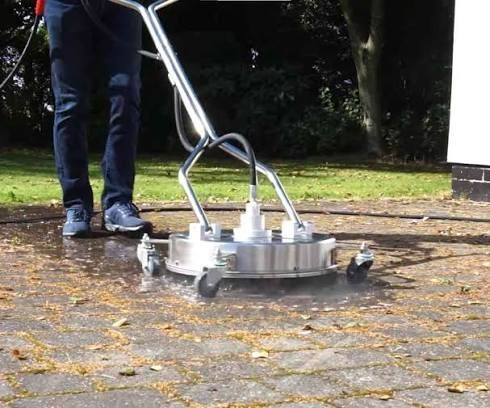
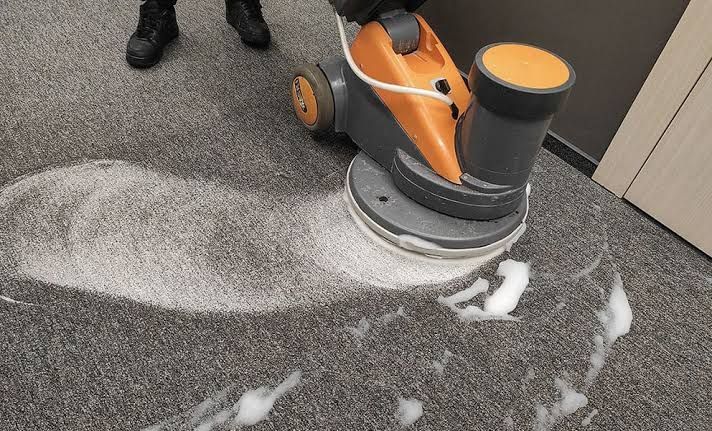
A pressure washer surface cleaner is a circular attachment that connects to a pressure washer. Inside the housing are rotating spray bars with pressure washing nozzles.
When water flows through the attachment, the spray bars rotate rapidly while the machine moves across the surface.
This creates a controlled cleaning pattern over a wider section of paving.
A normal pressure washing lance releases water from one nozzle or spray pattern. A surface cleaner covers more area at once. This can make it easier to keep the cleaning action consistent over a large driveway, patio or paved area.
The housing also helps contain some of the water and spray that would normally move in different directions when using an exposed lance.
This does not mean there is no water or mess. Pressure washing still produces runoff and removed dirt needs to be managed properly. The difference is that a surface cleaner can make the cleaning process more controlled.
For larger outdoor areas, this can be a practical and efficient way to achieve a cleaner appearance.
How does a rotary surface cleaner work?
The basic principle is quite simple.
High pressure water enters the surface cleaner and reaches the rotating spray bars. The pressure causes the bars to spin while the nozzles direct water towards the paving.
As the cleaner moves across the driveway or patio, the rotating jets work across the surface.
The operator needs to keep a steady pace and avoid stopping in one position. Moving too slowly in one area can create a difference in appearance. Moving too quickly can leave dirt behind.
The correct pressure and nozzle arrangement also matter.
A professional cleaner considers the surface material, age, condition, jointing, level of dirt and type of staining before deciding how to clean it.
This is why effective
surface cleaner pressure washing is about more than attaching a machine and turning it on.
Is it different from a pressure washing lance?
Yes.
A pressure washing lance provides a more direct spray and gives the operator excellent control for detailed cleaning. It is useful for corners, edges, steps, awkward areas and specific stains.
A surface cleaner is more useful for larger flat sections.
Think of a driveway with a wide open area. Cleaning every section with a narrow pressure washing lance can take more passes and may make it harder to maintain an even distance from the surface.
A surface cleaner creates a wider cleaning pattern.
That does not mean a surface cleaner replaces the lance.
A good professional pressure washing job normally uses both. The surface cleaner can cover the main area while the lance can be used for areas where the circular attachment cannot reach.
This combination helps create a more complete result.
Which surfaces are suitable for this equipment?
Surface cleaners are commonly used on suitable hard, flat outdoor areas.
This can include:
- Concrete driveways
- Suitable block paving
- Some paving slabs
- Suitable patios
- Paths
- Courtyards
- Some commercial hard surfaces
The exact method depends on the material.
Concrete can often handle pressure washing well when it is in sound condition. Block paving can also be cleaned effectively, but the joints need careful treatment because pressure can remove joint sand.
Natural stone requires more care because different types of stone have different levels of hardness and porosity.
Older paving, damaged areas, loose slabs and surfaces with weak joints may require a gentler method.
Before starting
surface cleaner pressure washing, the surface should be assessed properly.
Can a surface cleaner be used on block paving?
Yes, but care is important.
Block paving is made from individual blocks with jointing material between them. Dirt, moss, algae and weeds can build up around these joints, making the driveway or patio look untidy.
A professional surface cleaning approach can remove a large amount of built up dirt from the blocks.
However, cleaning can also disturb some of the jointing sand.
This is why block paving often needs additional care after pressure washing.
Once the surface is clean and fully dry, fresh kiln dried sand may be brushed into the joints where required. This helps restore the joints and gives the finished paving a neater appearance.
You can also learn more about the process in our guide to cleaning block paving.
At Jimmy's External Cleaning Services, the condition of the joints is considered before cleaning. The aim is to remove dirt without using unnecessary pressure that could cause avoidable problems.
Is a surface cleaner safe for natural stone?
It can be, but natural stone needs the right approach.
Sandstone, limestone, slate, granite, Indian stone and other materials do not all respond to pressure in the same way.
Some stone surfaces are more porous or softer than others. Strong pressure used too aggressively can affect the surface texture, remove joint material or leave unwanted marks.
The cleaning method may need to include lower pressure, a wider spray pattern, suitable cleaning products or a different cleaning technique.
The age and condition of the stone also matter.
For example, an older patio with weathered joints may need much more care than a newer surface in good condition.
A professional does not judge a patio by appearance alone. The surface needs to be assessed before cleaning.
Our patio cleaning service in Bradford is designed around the material and condition of the patio rather than applying the same pressure to every surface.
Why does it reduce visible cleaning lines?
One major advantage of surface cleaner pressure washing is the more consistent cleaning pattern it can provide.
When a lance is used over a large surface, the operator must maintain a fairly consistent distance, movement and overlap. Even a small difference can sometimes create lighter and darker sections.
A circular surface cleaner keeps the rotating spray bars at a controlled distance from the surface.
This helps create a more uniform cleaning action.
However, visible lines can still appear if the cleaner is moved unevenly, the machine is stopped, the surface has heavy staining or different areas have different levels of contamination.
The skill of the operator still matters.
A professional will normally work in organised sections and overlap passes carefully to reduce uneven areas.
Does it reduce water spray and mess?
It can help control spray compared with using an exposed pressure washing lance, particularly on large flat surfaces.
The round housing keeps much of the spray closer to the cleaning area.
This can make the work more manageable around suitable driveways and patios.
There will still be runoff because the dirt and cleaning water have to go somewhere.
Proper cleaning also means considering nearby walls, doors, plants, garden furniture and drainage points.
A responsible cleaning service will prepare the area and manage the wash water and removed dirt as carefully as possible.
The goal is not just a clean surface. It is a clean work area and a tidy finish.
Can it clean edges and corners?
This is one area where a surface cleaner has limitations.
Because of its round design, it cannot usually clean tightly into every corner.
Edges beside walls, steps, fences and raised borders may require a pressure washing lance.
Corners can also collect more dirt than the centre of a driveway because leaves, soil and moisture often gather there.
For this reason, a surface cleaner is usually only one part of the process.
An experienced operator will clean the main open areas with the surface cleaner and then use a lance or another suitable tool around edges and difficult sections.
This produces a more complete result.
Why can circular marks appear?
Circular or uneven marks can appear when the surface cleaner is not used correctly.
Possible causes include holding the machine in one area for too long, using an unsuitable pressure level, moving at an inconsistent speed or repeatedly cleaning one section more than another.
A surface may also look patchy after cleaning because old dirt has built up unevenly.
For example, part of a driveway under a vehicle may have a different level of contamination from an open section exposed to rain.
This is why professional surface cleaner pressure washing requires a steady technique.
The operator should keep the machine moving at a controlled pace and use overlapping passes where appropriate.
If circular marks appear, they may become more obvious as the surface begins to dry.
Careful technique helps reduce this problem.
Does the surface need treatment first?
Sometimes.
The right preparation depends on what is making the surface dirty.
Loose leaves, soil and debris should normally be removed first.
Moss and weeds may need to be loosened or removed before pressure washing.
Heavy organic growth may also benefit from a suitable cleaning treatment before washing.
Oil and other stubborn stains can need targeted treatment because pressure washing alone does not always remove deep staining.
Using a suitable treatment can make the main cleaning stage more effective.
At the same time, chemicals should not be selected at random. Products need to be suitable for the surface and used according to the instructions.
This is particularly important around gardens, grass and planted areas.
What happens after surface cleaner pressure washing?
The work should not simply stop when the paving looks clean.
The surface needs to be checked properly.
Some stains may become more visible once the paving starts drying. Additional spot treatment may be needed for stubborn areas.
Block paving may require joint sand replacement.
Some surfaces may benefit from sealing after the cleaning process.
For example, our driveway cleaning service in Bradford can be combined with additional maintenance depending on the surface and its condition.
Where suitable, sealing can help protect paving and improve the finished appearance.
You can read more about driveway sealing and restoration to understand how aftercare can support a clean and well maintained surface.
Bradford case study - cleaning a tired driveway
Consider a typical Bradford block paved driveway that has become dull after months of rain and damp weather.
The blocks may have green algae, dark dirt, moss and weeds growing between the joints. Areas beneath parked vehicles may also look different from sections that receive more rain and sunlight.
The first stage is to inspect the surface and identify areas that need special attention.
Loose debris and weeds can then be removed.
Where appropriate, treatment can be applied to help loosen organic growth and stubborn contamination.
The main open areas can then be cleaned using surface cleaner pressure washing, with the operator working steadily across each section.
The edges, corners and difficult areas can be cleaned using a pressure washing lance.
After the main clean, the driveway can be inspected for remaining stains and uneven areas.
If joint sand has been disturbed, fresh kiln dried sand may be added once the paving is dry.
The result is a driveway that looks brighter, cleaner and more cared for.
For this type of Bradford project, original before and after photographs are useful because they show the actual condition of the surface before cleaning and the finished result afterwards.
Can homeowners use this equipment safely?
Yes, homeowners can use surface cleaning equipment, but the machine can be more powerful than many people expect.
The biggest mistake is assuming that more pressure always means better cleaning.
It does not.
Too much pressure can damage surfaces, remove jointing material or leave unwanted marks.
There is also a safety issue. High pressure water can injure skin and damage property if it is directed at the wrong area.
The operator also needs to manage electrical equipment, water supply, drainage and surrounding surfaces correctly.
Homeowners who have experience with pressure washing may be comfortable using suitable equipment on robust surfaces.
However, if you are unsure about the material or the correct pressure, professional advice can help prevent expensive mistakes.
Why do professionals still need a cleaning lance?
Even when a professional uses a surface cleaner, a cleaning lance remains important.
A lance provides flexibility.
It can clean:
- Edges
- Corners
- Steps
- Narrow paths
- Wall lines
- Drain areas
- Stubborn spots
- Areas around obstacles
A surface cleaner is excellent for large flat sections, but it cannot reach every part of a property.
A professional pressure washing service therefore uses different tools for different jobs.
This is an important point when comparing surface cleaner pressure washing with standard pressure washing.
The best cleaning method is not always about choosing one tool. It is about using the right tool in the right place.
Is a surface cleaner better than a pressure washing wand?
For large flat areas, a surface cleaner can provide a more even cleaning pattern and can make the work more efficient.
A pressure washing wand is more flexible and better for edges, corners, steps and detailed work.
Neither tool is automatically better for every situation.
The best choice depends on the surface, size, condition and type of dirt.
Can a surface cleaner damage paving?
Yes, incorrect use can damage some paving.
Potential problems include surface marking, removal of joint sand and damage to weaker or older surfaces.
Correct pressure, distance, movement and cleaning technique are important.
Does a surface cleaner remove weeds?
It can remove loose weeds and growth from the surface, but it does not guarantee permanent weed control.
Weeds growing deeply into block paving joints may need separate removal.
After cleaning, restoring the joints with suitable material can also help improve the condition of block paving.
Can it be used on a patio?
Yes, a surface cleaner can be suitable for many patios.
However, the patio material should be assessed first.
Concrete, block paving, natural stone and other paving materials can require different cleaning methods.
For delicate or weathered surfaces, a lower pressure or alternative cleaning method may be more suitable.
When should another cleaning method be used?
There are situations where a surface cleaner may not be the best choice.
Very delicate surfaces may need soft washing or gentle cleaning.
Loose paving may need repairs before pressure washing.
Damaged surfaces can require restoration rather than aggressive cleaning.
Deep oil contamination may require specialist stain treatment.
Vertical walls and awkward areas are generally better suited to a lance or another cleaning method.
The important thing is to identify the condition of the surface before choosing the equipment.
At
Jimmy's External Cleaning Services, we look at the surface first and then select a suitable method. Our services cover Bradford driveways, patios, paving and other exterior surfaces.
Why choose Jimmy's External Cleaning Services in Bradford?
Cleaning an outdoor surface properly takes more than a powerful machine.
It requires knowledge of materials, pressure control, cleaning products, surface preparation and finishing.
Jimmy's External Cleaning Services works with outdoor surfaces across Bradford and understands how rain, damp conditions, moss and algae can affect patios and driveways.
We focus on careful cleaning and suitable methods rather than using the strongest possible pressure.
For homeowners, this means a practical approach based on the actual condition of the property.
You can also explore our driveway cleaning guide for more information about safe driveway cleaning methods.
Surface cleaner pressure washing can be an excellent choice for suitable flat outdoor surfaces.
Its rotating spray bars help cover larger areas with a controlled cleaning pattern. This can reduce visible cleaning lines, improve consistency and make large driveways and patios easier to clean.
But the equipment itself is not what guarantees a good result.
The surface needs to be assessed first. The pressure needs to be appropriate. Stubborn stains may need treatment. Edges and corners usually need a lance. Block paving may need fresh joint sand after cleaning.
For Bradford homeowners, professional surface cleaning can make a tired patio or driveway look dramatically fresher while helping maintain the condition of the paving.
When the right equipment and technique are combined, surface cleaner pressure washing can deliver a powerful, impressive and more even clean.
For advice about your own driveway or patio, Jimmy's External Cleaning Services can assess the surface and explain which cleaning method is most suitable.
Ready for a Fresh, Clean Outdoor Surface?
A professionally cleaned driveway or patio can transform the appearance of your Bradford property.
Contact
Jimmy's External Cleaning Services for practical advice and a clear quote based on your surface and cleaning needs.