How to Clean Fabric Upholstery Safely - Expert Guide & Quote
Knowing how to clean fabric upholstery correctly can help your sofa, armchair and dining chairs stay cleaner and look better for longer. The most important point is that not every fabric should be cleaned in the same way.
Before applying water or any upholstery fabric cleaner, vacuum the furniture carefully and check the manufacturer's care instructions. The correct cleaning method depends on the fibre, colour, construction, backing and whether the material can safely handle moisture.
Cotton, polyester, linen, microfibre and mixed fabrics can all react differently to cleaning. A method that works well on one sofa could leave marks, colour changes or other problems on another.
If you live in Bradford and are unsure what your furniture needs, Jimmy's External Cleaning Services upholstery cleaning Bradford service can help assess your furniture and discuss an appropriate cleaning approach. The company provides upholstery cleaning for sofas, armchairs, dining chairs and other suitable fabric furniture in Bradford.
How to Clean Fabric Upholstery
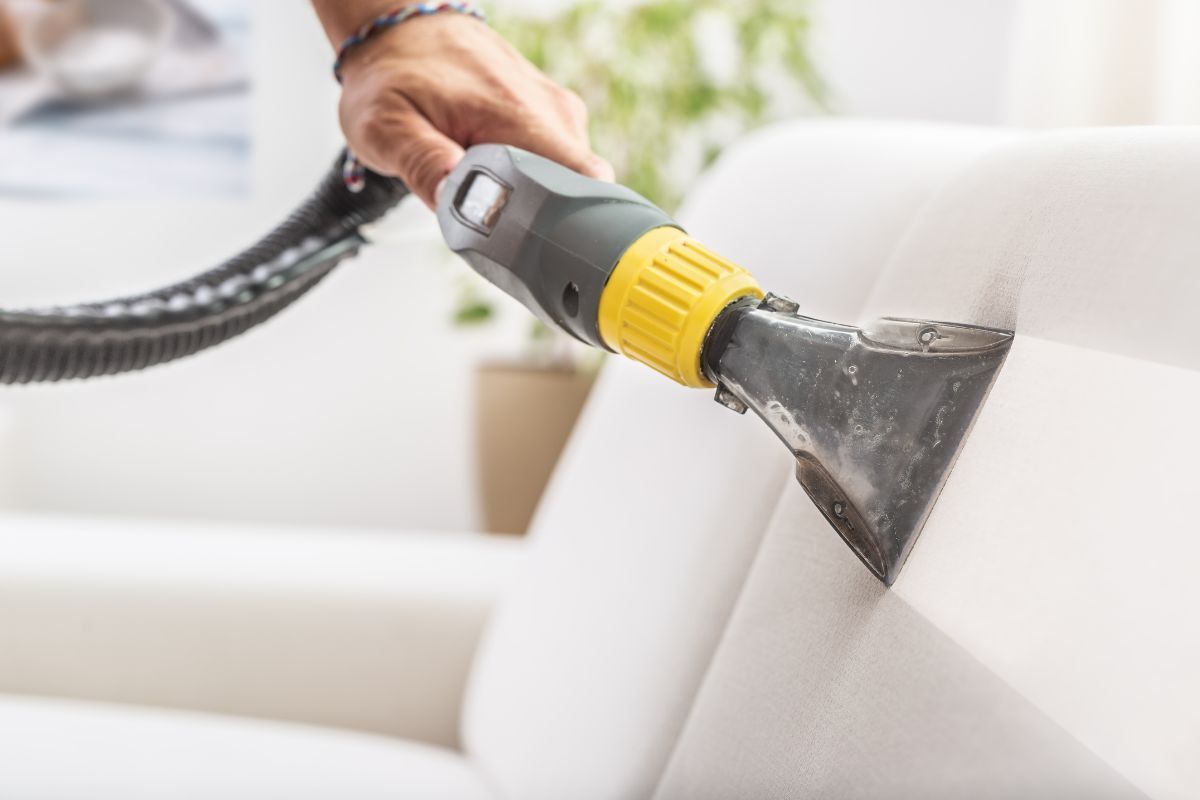
The safest way to approach how to clean fabric upholstery is to work in stages rather than applying a cleaning product immediately.
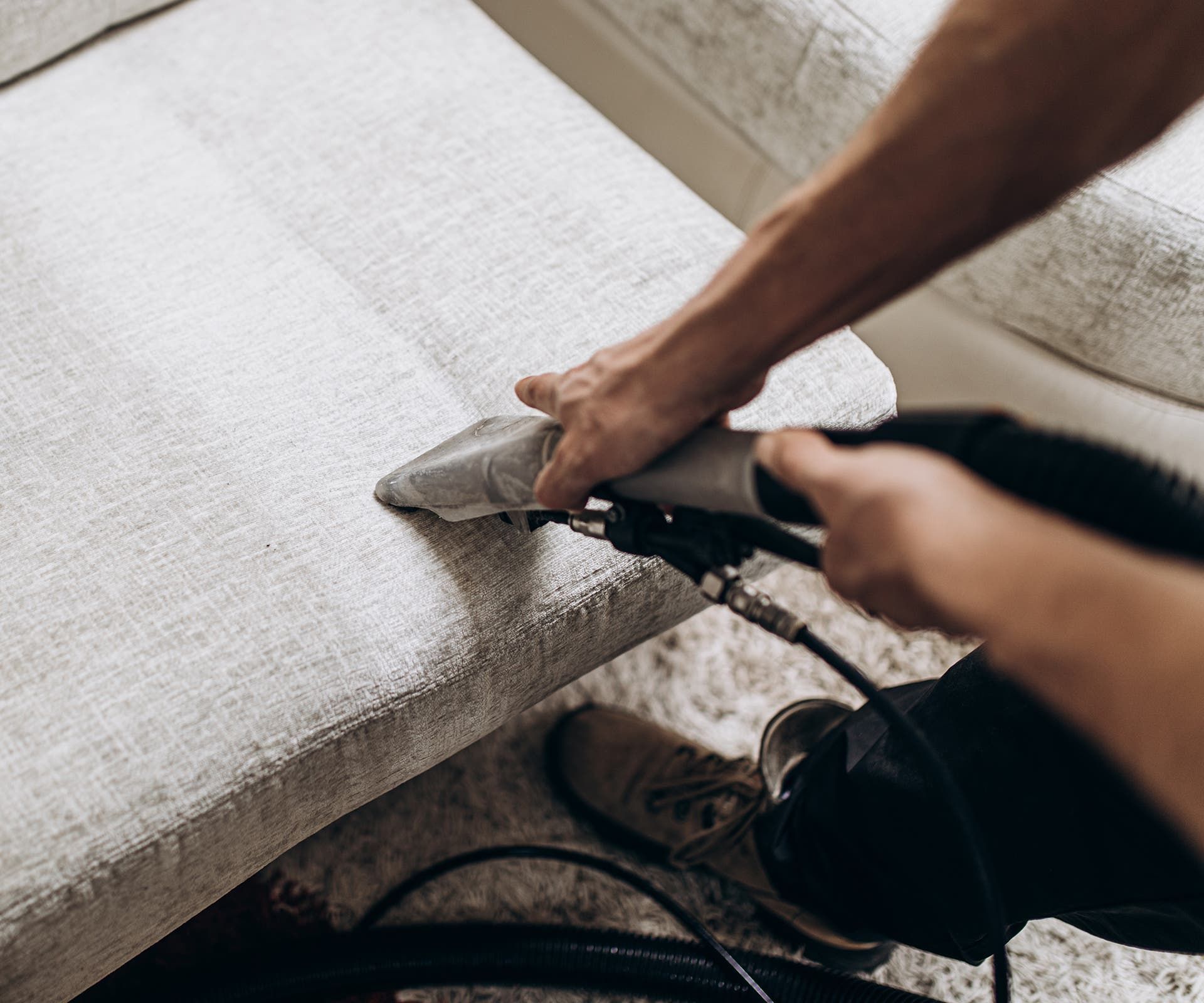
Start by removing cushions where possible and vacuuming the entire piece of furniture. Pay attention to seams, edges, gaps and areas around the arms.
Next, identify the fabric and read the care information supplied by the furniture manufacturer. If a cleaning product is suitable, test a very small amount on an area that is normally hidden.
For many pieces of furniture, the basic process is:
- Remove loose dust and crumbs with a vacuum
- Check the furniture care instructions
- Identify the upholstery material
- Test any cleaning product on a hidden area
- Treat marks carefully rather than soaking the whole surface
- Use as little moisture as reasonably possible
- Allow the upholstery to dry fully before normal use
The main mistake people make with
fabric furniture cleaning is assuming that more water or more cleaning solution means better results. Upholstery contains different layers, so moisture can sometimes travel below the visible surface.
Identify the Fabric Before Cleaning
Before learning how to clean fabric upholstery, you need to know what you are actually cleaning.
Upholstery is not simply the visible material on a sofa. The term can include the fabric covering and the different materials used to build and pad furniture. You can read more about the general construction of upholstery on Wikipedia.
Your furniture may be covered with:
- Cotton
- Polyester
- Linen
- Microfibre
- A mixture of natural and synthetic fibres
- Other specialist materials
Two sofas that look very similar may contain completely different fibres.
Check any label underneath the cushions, under the sofa or attached to the furniture. If you still cannot identify the material, avoid guessing.
Why the Furniture Care Label Matters
Furniture care information can tell you whether the material is suitable for certain cleaning methods.
Some fabrics tolerate controlled moisture well. Others need limited moisture or specialist treatment.
Do not assume that removable cushion covers are automatically suitable for a washing machine.
A zip may simply allow the manufacturer or upholsterer to fit or replace the cover. Washing an unsuitable cover could affect its size, colour or shape.
The safest approach is always to follow the furniture manufacturer's instructions first.
If the label is unclear, damaged or missing, consider professional advice before using a strong product or wet cleaning method.
How to Clean Cotton Upholstery
Cotton feels soft and comfortable, which makes it popular for home furnishings. However, different cotton upholstery fabrics can have different dyes, finishes and constructions.
When considering how to clean fabric upholstery made from cotton, begin with thorough vacuuming.
Do not automatically soak cotton furniture simply because cotton clothing can often be washed.
Upholstered furniture has padding, backing and construction materials underneath the visible fabric.
For light surface dirt, use only a cleaning method approved for the furniture.
When treating a mark:
- Blot rather than scrub
- Work carefully
- Avoid spreading the affected area
- Use limited moisture
- Check regularly for colour transfer
Strong rubbing can disturb fibres and may make the cleaned area look different from the surrounding fabric.
How to Clean Polyester Upholstery
Polyester is widely used in furniture and can also be blended with other fibres. Polyester fabrics are commonly found in upholstered furniture and other household textiles. You can learn more about the material on the Wikipedia polyester page.
When cleaning polyester upholstery, do not rely on the fibre name alone.
A polyester sofa may still contain:
- Different dyes
- Protective treatments
- Mixed fibres
- Decorative finishes
- Different backing materials
Vacuum the surface thoroughly and check the manufacturer's cleaning information.
For everyday marks, use a suitable upholstery fabric cleaner only after testing it on a hidden section.
Avoid saturating the material. Even when the visible fabric can tolerate moisture, excessive liquid may reach the layers underneath.
How to Clean Linen Upholstery
Linen can give furniture a natural and attractive appearance, but care is important.
Linen is made from flax fibres and is also used for upholstery and home furnishing materials. More information about the material is available on Wikipedia's linen guide.
If you have linen furniture, check the manufacturer's instructions before applying water.
Start with careful vacuuming using an appropriate attachment.
If you need to treat a spill, blot it quickly with a clean absorbent cloth. Avoid aggressive rubbing.
Some linen furniture may need professional attention, particularly when:
- The fabric is pale
- The mark covers a large area
- The furniture is valuable
- The care instructions limit moisture
- The fabric already has water marks
- You cannot identify the exact construction
Professional assessment can be safer than experimenting with several household products.
How to Clean Microfibre Upholstery
Microfibre is a synthetic material made using extremely fine fibres. Polyester and polyamide are commonly used in microfibre materials. Microfibre is also used for upholstery. You can read more on the Wikipedia microfibre page.
However, not every microfibre sofa should be cleaned in exactly the same way.
Always check the furniture instructions first.
Vacuum carefully to remove dust and loose debris before using any cleaning solution.
When treating a mark, avoid soaking the material. Test your chosen method somewhere hidden and allow that test area to dry before deciding whether the result is acceptable.
How to Clean Mixed Fabric Upholstery
Many modern sofas use blended fibres rather than one single material.
For example, a fabric could combine natural and synthetic fibres to provide particular appearance, comfort or durability characteristics.
Mixed upholstery can make how to clean fabric upholstery more complicated because you cannot simply follow advice for one fibre.
If the label states that the material contains several fibres, follow the furniture manufacturer's recommended method.
Do not choose your cleaning method based only on whichever fibre has the highest percentage.
Other parts of the construction can also influence how the upholstery responds.
Vacuum Before Applying Any Cleaner
One of the easiest ways to improve fabric furniture cleaning is also one of the most commonly rushed steps.
Vacuum first.
Furniture collects:
- Dust
- Crumbs
- Pet hair
- Loose soil
- Skin particles
- Fibres
- Debris between cushions
Cleaning a dusty sofa with moisture can make the job harder because loose dirt may combine with the cleaning solution.
Use a clean upholstery attachment if available.
Work slowly across the seats, back, arms and cushion edges.
Pay extra attention to seams and gaps between cushions because dirt often builds up there.
For removable cushions, vacuum both sides where appropriate.
Test the Fabric for Colour Change
Before applying a cleaning product across a visible part of the furniture, test a small hidden section.
This step is especially important when learning how to clean fabric upholstery at home.
Choose an area that is normally out of sight.
Apply a very small amount using the same method you intend to use on the visible area.
Then check for:
- Colour transfer
- Fading
- Darkening
- Texture changes
- Water marks
- Changes after drying
Do not judge the test while it is still wet.
Allow the section to dry properly before deciding whether to continue.
If you notice an unwanted change, stop.
Cleaning Everyday Dirt
Not every sofa needs intensive cleaning.
Sometimes the furniture simply looks slightly dull because of regular use.
Start by vacuuming thoroughly.
Pay particular attention to areas that receive frequent contact, including:
- Armrests
- Headrests
- Front edges of cushions
- Favourite seating positions
- Dining chair seats
- Do not repeatedly scrub darker areas.
What appears to be dirt could sometimes include wear, colour loss or changes to the fabric itself. Cleaning cannot restore fabric that has physically worn away.
Use the cleaning method recommended for the furniture and keep moisture controlled.
Removing Fresh Spills
Quick action can make a major difference when a drink or other liquid is spilled.
Use a clean absorbent cloth to blot the area.
Do not aggressively rub the spill because this can spread it further across the fabric.
Work carefully and allow the cloth to absorb as much liquid as possible.
Before using any cleaning product, check the furniture instructions.
If you know what caused the spill, remember it. This information can be useful if professional treatment becomes necessary.
Avoid applying several household products one after another because mixed residues can make later cleaning more difficult.
Dealing With Greasy Marks
Greasy marks can be particularly noticeable on fabric furniture.
Common causes include:
- Food
- Skin oils
- Hair products
- Hand creams
- Cosmetics
- Pet contact
Do not immediately soak a greasy mark with water.
The best treatment depends on the upholstery material and the type of contamination.
If the furniture instructions allow a suitable cleaning product, test it first.
Greasy areas around sofa arms and headrests can build gradually over months or years. Older marks may therefore require more attention than a fresh spill.
When a large area has become heavily marked, professional
fabric furniture cleaning may provide a more controlled solution.
Removing Food and Drink Marks
Food and drinks cause many common furniture stains.
Tea, coffee, juice, sauces and other substances contain different ingredients, which means one cleaning method will not necessarily work for every mark.
When the spill is fresh:
- Remove any solid material carefully
- Blot excess liquid
- Avoid spreading the stain
- Check the care instructions
- Use an appropriate treatment only if suitable
- Do not scrub aggressively.
If a mark has already dried, forcing large amounts of cleaner into the fabric can create a larger wet patch without solving the original problem.
There is also no guarantee that every stain can be removed completely.
The final result can depend on the fabric, colour, age of the stain and products previously used.
How Much Moisture Should You Use?
One of the most important parts of learning how to clean fabric upholstery is moisture control.
Furniture is different from a washable piece of clothing.
Under the fabric you may have padding and other construction materials.
Too much moisture may increase drying time and can cause unwanted marks on certain fabrics.
Use only the amount required for the approved cleaning method.
Avoid pouring cleaning solution directly onto the sofa.
More product does not automatically mean more cleaning power.
It can simply mean more residue and more moisture to remove.
How to Dry Fabric Upholstery
Correct drying is an important part of how to clean fabric upholstery.
After suitable wet cleaning, allow the furniture to dry fully.
Good airflow around the furniture can help.
Where appropriate, open windows or improve ventilation in the room.
Avoid sitting on damp cushions.
Do not place blankets, cushions or other items over wet upholstery because this can restrict airflow.
Drying time varies according to:
- Fabric type
- Furniture construction
- Room temperature
- Ventilation
- Humidity
- Amount of moisture used
- Cleaning method
There is no single drying time that applies to every sofa.
If professional cleaning has been completed, follow the cleaner's specific drying advice.
Frequently Asked Questions
What is the best way to clean fabric upholstery?
The safest starting point for how to clean fabric upholstery is to vacuum thoroughly, identify the material, check the manufacturer's instructions and test any suitable cleaning product on a hidden section. Avoid excessive moisture and aggressive scrubbing.
Can fabric upholstery be washed?
Some upholstery covers may be washable, but many are not. A removable cover or zip does not automatically mean the fabric is suitable for machine washing. Always check the manufacturer's care instructions first.
How long does fabric upholstery take to dry?
There is no fixed drying time. It depends on the fabric, padding, cleaning method, amount of moisture, room temperature, humidity and ventilation. Avoid using the furniture until it has dried properly.
Can I use washing up liquid on fabric upholstery?
Do not assume a household product is suitable for your furniture. Check the manufacturer's cleaning instructions first. Products can leave residues or affect certain colours and finishes.
How often should I vacuum a fabric sofa?
The right frequency depends on how much the sofa is used. Homes with children, pets or frequent visitors may benefit from more regular vacuuming. Pay particular attention to seams, cushion gaps and heavily used seating positions.
Can old stains be removed from a fabric sofa?
Some old stains can improve with appropriate treatment, while others may remain partly visible. Results depend on the substance, fabric, age of the mark and any products previously applied.
Should I scrub a stain on a fabric chair?
Aggressive scrubbing is usually best avoided. It can spread the mark or disturb the texture of the fabric. Blot fresh spills and follow the furniture manufacturer's cleaning guidance.
Can I clean a polyester sofa myself?
Some polyester upholstery can be maintained at home, but the correct method depends on the complete furniture construction and care instructions. Test any approved product on a hidden section first.
How do I clean fabric dining chairs?
Start by vacuuming the chair carefully and checking its care instructions. Treat marks according to the fabric type and avoid saturating the seat. For several heavily marked chairs, professional fabric chair cleaning may be more practical.
Who provides upholstery cleaning in Bradford?
Jimmy's External Cleaning Services provides upholstery cleaning for suitable sofas, armchairs and dining chairs in Bradford. You can contact the company with photographs, details about the furniture and information about any stains to discuss your cleaning requirements.
Ready for Cleaner Upholstery in Bradford?
If your sofa or chairs are looking tired, stained or difficult to clean, you do not need to keep experimenting with different household products.
Contact Jimmy's External Cleaning Services for professional upholstery cleaning in Bradford.
Send details of your furniture, photographs of the areas you want cleaned and any available care label information to request a quote.
Refresh your furniture. Protect your fabric. Request your Bradford upholstery cleaning quote today.