How to Clean a Carpet by Hand for a Fresher Home Today
Learning how to clean a carpet by hand can be useful when you want to freshen a carpet without using a large carpet cleaning machine. Hand cleaning can help with light dirt, small stains, everyday marks and areas that need careful attention.
The most important part is using the right method. Adding too much water, using a strong cleaning product or rubbing the carpet aggressively can leave the fibres damaged or the backing wet for too long.
For most carpets, the basic method is simple. Vacuum thoroughly, prepare a gentle cleaning solution, test it in a hidden area, work on small sections, remove excess cleaning solution and allow the carpet to dry completely.
This guide explains how to clean a carpet by hand safely, what products you may need, how to deal with common stains and when professional carpet cleaning may be the better choice.
For property owners in
Bradford, Jimmy's External Cleaning Services can also help when a carpet needs a deeper and more thorough clean.
Quick Answer for Hand Cleaning Carpet
If you want to know how to clean a carpet by hand, start by removing as much dry dirt as possible with a vacuum cleaner.
Next, prepare a small amount of mild carpet cleaning solution according to the product instructions. Test the solution on a hidden section of carpet before treating a larger area.
Apply only a small amount of moisture. Work gently with a clean cloth or soft brush, depending on the carpet type. Avoid pouring water directly onto the carpet.
After cleaning, use clean damp cloths to remove any remaining cleaning product. Press clean towels onto the carpet to draw out moisture and then provide plenty of ventilation until the carpet is completely dry.
The basic order is:
- Vacuum the carpet thoroughly.
- Check the carpet material.
- Choose a suitable cleaner.
- Test the cleaning product.
- Work on a small area at a time.
- Use limited moisture.
- Remove cleaning residue.
- Extract as much moisture as possible.
- Allow the carpet to dry completely.
This approach is suitable for many everyday cleaning situations, but heavily soiled carpets may need professional equipment.
When Hand Cleaning Is Suitable
Understanding how to clean a carpet by hand also means knowing when this method is suitable.
Hand cleaning works best when a carpet has light general dirt, a few visible marks or an area that needs refreshing. It can also be useful when you do not have access to a carpet cleaning machine.
For example, you may want to hand clean a small bedroom carpet after moving furniture or clean a section near a doorway where shoes have left visible marks.
Hand cleaning can also be useful for dealing with a fresh spill before it has time to become a more difficult stain.
However, hand cleaning has limits.
It may not remove dirt that has travelled deep into the pile and carpet backing. Large areas can also take considerable time to clean evenly by hand.
If the carpet has strong smells, widespread staining, heavy traffic marks or dirt deep within the fibres, professional
carpet deep cleaning may provide a more complete result.
Carpet Types That Need Extra Care
If you are unsure about the material, professional advice can be safer than experimenting with different products.
Supplies Needed for Hand Cleaning
You do not need a complicated collection of equipment to understand how to clean a carpet by hand.
A few basic items are usually enNot every carpet should be cleaned in exactly the same way.
Before learning how to clean a carpet by hand, try to identify the carpet fibre and check any care information provided by the manufacturer.
Wool Carpet
Wool carpet requires careful handling.
Too much moisture can cause problems, while unsuitable cleaning products may affect the fibres or colour. Strong alkaline cleaners and aggressive scrubbing should generally be avoided unless the manufacturer specifically states that they are suitable.
Use a cleaning product designed for wool and test it carefully before continuing.
Synthetic Carpet
Many modern household carpets use synthetic fibres such as nylon or polypropylene.
These materials can often tolerate routine cleaning better than delicate natural fibres, but this does not mean every cleaning chemical is safe.
Always read the carpet cleaner label and follow the carpet manufacturer's care advice.
Deep Pile Carpet
A thick or deep pile carpet can hold a surprising amount of dust, hair and other debris.
It can also hold water.
When hand cleaning deep pile carpet, use very little liquid and make sure there is enough airflow to help the lower part of the carpet dry.
Light Coloured Carpet
Cream, beige and other light colours show marks easily.
Use clean white cloths when possible so you can see what is being lifted from the carpet and reduce the chance of colour transferring from the cloth.
Delicate Carpet
Older carpets, handmade carpets and carpets made from unusual natural fibres may need specialist care.
If you are unsure about the material, professional advice can be safer than experimenting with different products.
Supplies Needed for Hand Cleaning
You do not need a complicated collection of equipment to understand how to clean a carpet by hand.
A few basic items are usually enough.
You may need a vacuum cleaner, clean white cloths, clean towels, a bucket, warm water, a suitable carpet cleaning product and a soft brush if your carpet can safely be brushed.
A spray bottle can also help because it allows you to control how much cleaning solution reaches the carpet.
The most important item is the cleaning product.
Do not assume that ordinary household soap is suitable simply because it produces foam. Some products can leave sticky residue behind. This residue may attract dirt and make the carpet appear dirty again.
Choose a product that clearly states it can be used on your type of carpet.
You can read more about the general processes used for
carpet cleaning if you want to understand how different carpet cleaning methods work.
How to Prepare the Carpet
Good preparation can make the actual cleaning much easier.
Remove small furniture, toys, shoes, cables and other objects from the area.
Look carefully across the carpet and identify visible stains or particularly dirty sections. These areas may need separate attention rather than stronger cleaning across the whole carpet.
Check underneath furniture as well. You may find areas that are a different shade because they have been protected from sunlight and foot traffic.
Open windows if weather conditions allow. Good ventilation will become important when the drying stage begins.
If you are cleaning only part of a room, plan where you will start and finish. Work towards the doorway so you do not need to walk across areas you have just cleaned.
Vacuuming Before Adding Moisture
Vacuuming is one of the most important steps when learning how to clean a carpet by hand.
Carpets collect dry material such as dust, crumbs, hair, pet fur, soil and small particles.
If you add cleaning solution before removing this material, some of the loose dirt can become wet and harder to remove.
Vacuum slowly rather than rushing across the floor.
Go over busy areas more than once. Change direction if necessary so the vacuum can reach different sides of the carpet fibres.
Pay particular attention to edges, doorways, areas around sofas and routes that people regularly walk across.
If your vacuum cleaner has different height settings, use the setting recommended for your carpet type.
Removing as much loose dirt as possible gives you a cleaner surface to work with during the next stage.
How to Make a Gentle Cleaning Solution
When considering how to clean a carpet by hand, many people immediately look for homemade mixtures.
Be careful with homemade carpet cleaners.
Different carpets react differently to water, detergents, acids and alkaline products. A mixture that works on one carpet may cause fading, residue or fibre damage on another.
The safer option is usually to choose a carpet cleaning solution that is designed for the specific carpet material and follow its mixing instructions.
More cleaning product does not automatically produce a cleaner carpet.
Using excessive detergent can leave residue behind. That residue can make the fibres feel different and may attract fresh dirt.
If the product needs to be diluted, measure it correctly.
Warm water is often easier to work with than very cold water, but avoid using very hot water unless the carpet manufacturer or product instructions specifically recommend it.
Your aim is controlled cleaning, not soaking.
How to Test the Cleaning Solution
Never skip testing.
Choose an area that is normally hidden, such as behind a piece of furniture or in a corner.
Apply a small amount of the cleaning solution using the same method you plan to use on the main carpet.
Wait according to the product directions and inspect the area carefully.
Look for any change in colour, texture or appearance.
You can also press a clean white cloth against the tested area to see whether carpet dye transfers onto it.
If the colour changes or dye appears on the cloth, stop using the product.
Even when a cleaner says it is suitable for carpets, testing remains an important precaution because carpet materials, dyes and previous treatments can vary.
How to Clean Small Sections by Hand
The easiest way to understand how to clean a carpet by hand is to work slowly rather than trying to clean the entire room at once.
Divide the carpet mentally into manageable areas.
Start with one small section.
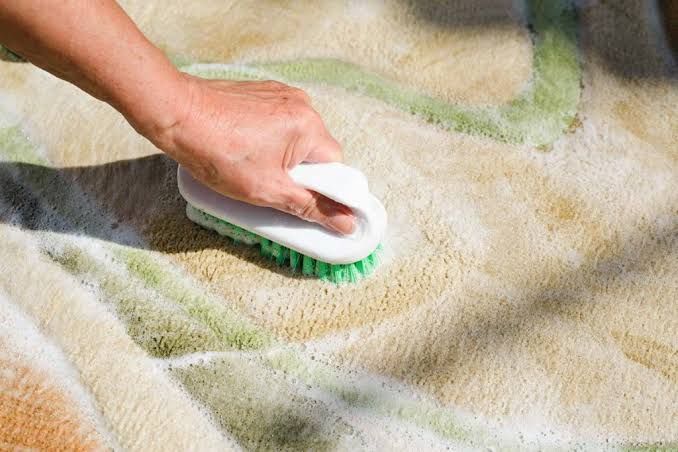
Apply a limited amount of cleaning solution using a clean cloth or spray bottle. The fibres should become lightly damp rather than saturated.
Work the product gently through the surface according to its instructions.
If a soft brush is suitable for your carpet, use gentle movements. Avoid aggressive scrubbing because this can affect the carpet pile.
Work systematically across the area so you do not miss sections or repeatedly clean the same place.
Once you have cleaned one area, use clean cloths to lift moisture and residue before moving on.
Change your cloths and water when they become dirty.
Using dirty cleaning water simply moves soil from one area to another.
Continue gradually until the required section is complete.
How to Deal With Carpet Stains by Hand
Stains need a more careful approach than general carpet cleaning.
The first step is identifying what caused the stain if possible.
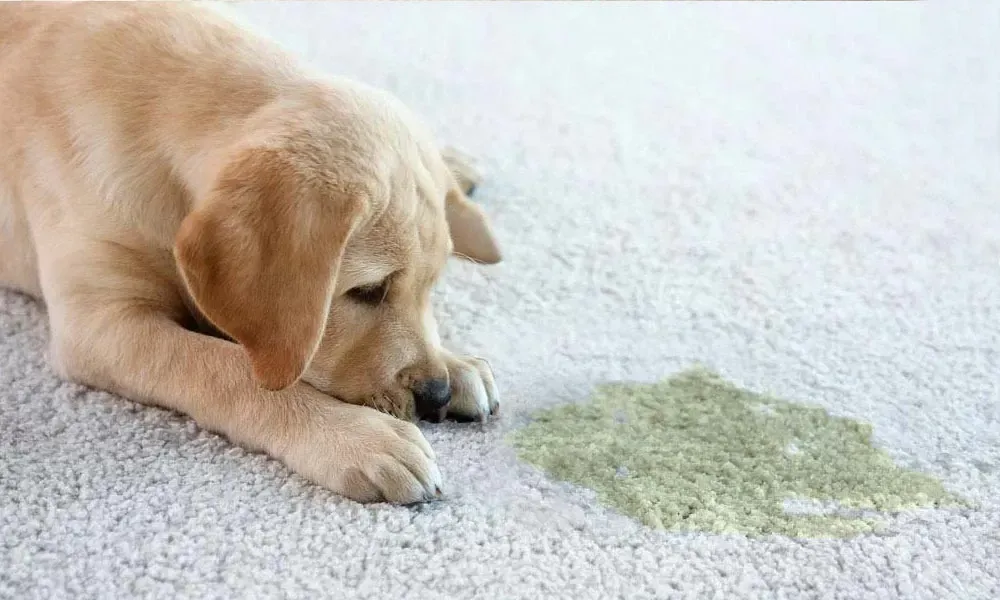
Fresh liquid spills should normally be blotted quickly.
Place a clean absorbent cloth over the spill and press gently. Replace the cloth as it becomes wet.
Do not rub aggressively.
Rubbing can spread the liquid over a larger area or push it farther into the fibres.
Once most of the excess liquid has been absorbed, use a stain treatment that is suitable for both the carpet material and the type of stain.
Apply the product according to its instructions.
Always work carefully around the outside of the stain and move towards the centre. This can help prevent the affected area from becoming larger.
Old stains may be more difficult because the substance may already have dried or bonded with the carpet fibres.
Repeatedly soaking an old stain is not always the answer.
If careful treatment does not improve the problem, a professional carpet cleaner may have more suitable products and equipment.
How to Remove Cleaning Residue
One of the common mistakes when learning how to clean a carpet by hand is leaving too much detergent in the carpet.
Cleaning products are designed to help loosen dirt, but they usually need to be removed properly.
If residue stays within the fibres, the carpet may feel stiff or sticky once dry. Sticky residue can also attract dust.
Use a clean cloth lightly dampened with clean water.
Gently blot or wipe the area to collect remaining cleaning solution.
Do not pour water directly onto the floor.
Rinse your cloth frequently and replace the water when it becomes cloudy.
You may need to repeat the process, especially if too much detergent was originally used.
Afterwards, use clean dry towels to absorb as much remaining moisture as possible.
How to Avoid Soaking the Carpet
Moisture control is one of the biggest parts of how to clean a carpet by hand correctly.
A carpet consists of more than the fibres you see on the surface.
Underneath the visible pile is the backing, and beneath the carpet there may also be an underlay.
If too much liquid passes through the carpet, these lower layers can become wet.
They normally take much longer to dry because air cannot circulate around them as easily.
Instead of pouring cleaning solution onto the carpet, apply small amounts.
A spray bottle can provide more control than a bucket.
Keep checking the area with your hand.
If the carpet feels heavily wet rather than lightly damp, stop adding liquid and begin removing moisture with dry towels.
You should also avoid assuming that more water means more dirt will be removed.
Successful carpet cleaning depends on loosening dirt and then removing it. Flooding the carpet does not automatically improve the result.
How to Dry Carpet After Hand Cleaning
Drying is just as important as cleaning.
Once you finish an area, press clean dry towels into the carpet.
This helps transfer moisture from the carpet into the towels.
Replace wet towels with dry ones as needed.
Increase airflow through the room.
Open windows when the weather is suitable. Interior doors can also be opened to improve air movement.
A household fan can help circulate air around the room.
Try to keep people and pets away from the cleaned area until it is fully dry.
Walking across damp carpet can flatten fibres and bring new dirt onto the surface.
Do not place heavy furniture back onto damp carpet.
Furniture legs can sometimes leave marks, and moisture can affect certain furniture materials.
Check the carpet carefully before considering the drying process complete. The surface can sometimes feel dry while deeper fibres remain damp.
Advantages and Limits of Hand Cleaning
There are several reasons people want to learn how to clean a carpet by hand.
It gives you direct control over the amount of moisture being used.
You can focus on one particular section instead of cleaning an entire room.
The basic equipment is easy to find.
Hand cleaning can also be useful for dealing with light marks between deeper carpet cleaning sessions.
However, there are limits.
Cleaning a large room manually can take a considerable amount of time.
It is also harder to remove water and cleaning solution from deep within a carpet without extraction equipment.
Deep dirt may remain below the visible surface even when the top of the carpet looks cleaner.
Uneven cleaning can also create visible differences between treated and untreated sections.
For light maintenance, hand cleaning can be practical. For heavy contamination or widespread dirt, a more thorough cleaning method may be needed.
Common Hand Carpet Cleaning Mistakes
Knowing what not to do is an important part of learning how to clean a carpet by hand.
One common mistake is using too much cleaning solution.
Another is applying too much water.
Some people also scrub stains very aggressively. This may spread the mark or affect the appearance of the carpet fibres.
Using random household products is another risk. Bleach, strong cleaners and products designed for hard surfaces can cause permanent carpet damage.
Skipping the test area can also create problems, especially on coloured or natural fibre carpets.
Another mistake is walking on the carpet before it is dry.
Even clean socks can transfer dirt or oils onto damp fibres.
Finally, do not cover a damp carpet or close the room without ventilation. Good airflow helps moisture escape.
How Often Should You Hand Clean a Carpet?
There is no single schedule that suits every property.
A bedroom used by one person may stay cleaner than a busy family living room.
Homes with children, pets or frequent visitors may need more regular attention.
Vacuuming should remain your main routine cleaning method.
Hand cleaning is better used when a particular area becomes dirty or when you want to freshen a lightly soiled section.
Try not to repeatedly wet clean the carpet simply because it is part of a weekly routine.
Clean according to the condition of the carpet and follow the manufacturer's care instructions.
A professional deep clean can be considered periodically when ordinary vacuuming and spot cleaning are no longer enough.
Cleaning High Traffic Carpet Areas
Hallways, living room entrances and areas near doors often become dirty more quickly than the rest of the carpet.
These sections receive repeated foot traffic.
Vacuum them carefully before applying any cleaner.
You may notice the carpet pile looks flatter in these locations. Cleaning can remove dirt, but it cannot always reverse physical wear caused by thousands of footsteps.
Use a suitable product and work gently.
Avoid repeatedly soaking the same high traffic section in an attempt to make it match less used areas.
If the difference remains significant after cleaning, professional treatment can help determine whether you are seeing removable dirt or permanent wear.
Carpet Cleaning in Bradford
Carpets in homes, rented properties, offices and other buildings around Bradford can experience very different levels of use.
Regular vacuuming and quick attention to spills can help with everyday maintenance, but there comes a point where hand cleaning has done as much as it reasonably can.
If your carpet still looks dull after careful cleaning, contains widespread marks or needs deeper treatment, you can explore our professional Carpet Cleaning Bradford service.
Jimmy's External Cleaning Services provides a practical solution for people who would rather have the condition of their carpet assessed before deciding how it should be cleaned.
A professional approach is particularly useful when you are unsure about the carpet material, when stains cover a large area or when the carpet has not received a thorough clean for a long time.
When Professional Deep Cleaning Gives Better Results
Learning how to clean a carpet by hand is useful, but it does not mean every carpet should be cleaned manually.
Professional cleaning is worth considering when normal vacuuming and careful hand cleaning no longer produce a satisfactory result.
Large carpets are one example.
Cleaning an entire living room by hand can take a long time. Maintaining even moisture and cleaning across such a large area is also difficult.
Deep dirt is another issue.
A carpet can look reasonably clean on top while holding soil deeper in the pile.
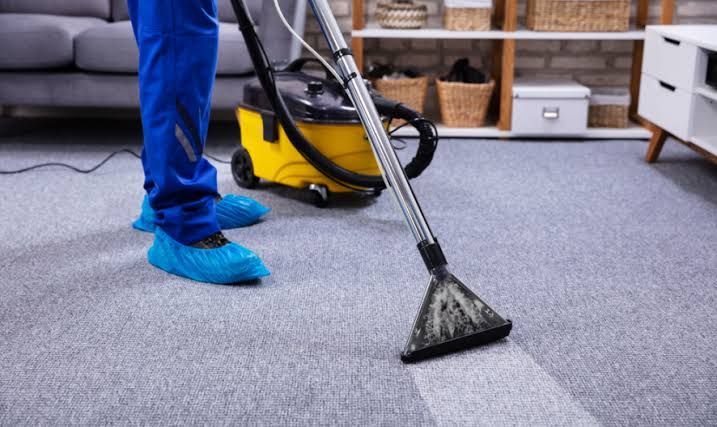
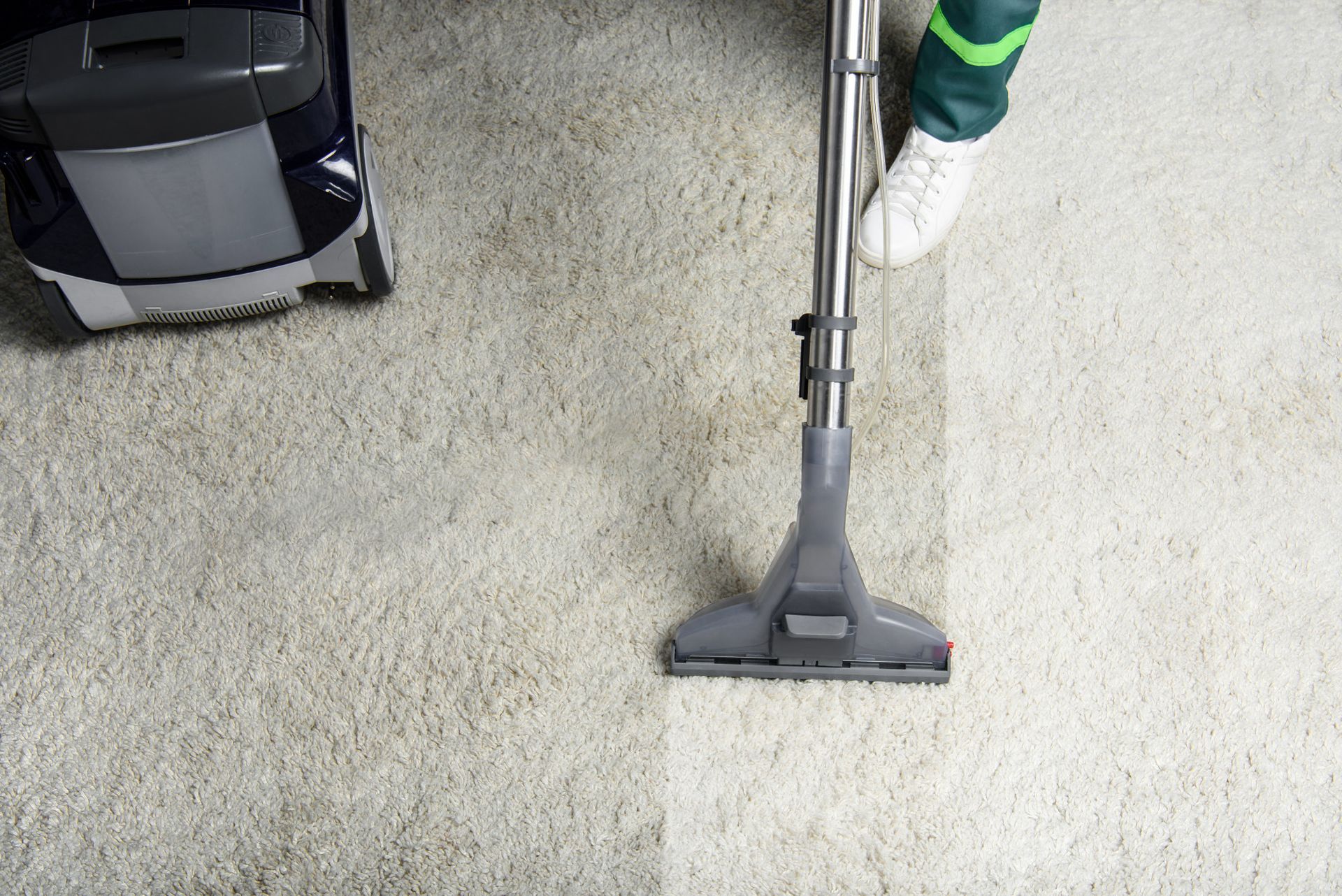
Professional equipment can provide cleaning and extraction that is difficult to reproduce with cloths and buckets.
You should also consider professional help when dealing with persistent smells, multiple stains, heavily used rental properties, commercial carpets or delicate materials that you do not feel confident cleaning yourself.
Jimmy's External Cleaning Services offers carpet cleaning in Bradford for customers who need more than routine household maintenance.
Choosing between hand cleaning and professional cleaning should depend on the carpet, the level of dirt and the result you are trying to achieve.
Frequently Asked Questions
Can I clean my carpet by hand without a machine?
Yes. If you are learning how to clean a carpet by hand, you can use a vacuum cleaner, suitable carpet cleaning solution, clean cloths and limited moisture. Work in small areas and make sure the carpet dries completely afterwards.
What is the easiest way to clean a carpet by hand?
Begin with thorough vacuuming. Test a suitable carpet cleaning product in a hidden area. Apply a small amount to one section, gently clean the fibres and remove the moisture and residue with clean cloths.
Should I scrub my carpet?
Aggressive scrubbing is usually best avoided. It can affect the carpet pile and may spread some stains. Gentle cleaning or blotting is normally more suitable.
Can I use washing up liquid on carpet?
It is better to use a product designed for carpet cleaning. Ordinary washing products can create excessive foam or leave residue within the fibres.
Can I clean carpet with only water?
Clean water may help with some very light fresh marks, but water alone will not deal effectively with every type of dirt or stain. Always consider the carpet material and the substance you are trying to remove.
How wet should carpet be when cleaning it by hand?
The carpet should not be soaked. Use the smallest practical amount of cleaning solution. The aim is to clean the fibres while preventing unnecessary moisture from reaching the backing and underlay.
How long does a hand cleaned carpet take to dry?
Drying time depends on how much moisture was used, the carpet thickness, room temperature, humidity and airflow. Keep the area well ventilated and avoid using the carpet until it feels completely dry.
Should I vacuum before hand cleaning?
Yes. Vacuuming removes loose dry dirt before moisture is introduced. This makes the later cleaning stages easier and reduces the amount of loose debris that becomes wet.
Can I walk on carpet immediately after cleaning?
It is better to wait until the carpet is completely dry. Walking over damp carpet can transfer dirt and flatten the fibres.
How do I clean badly stained carpet by hand?
Treat individual stains according to their cause and the carpet material. Blot fresh spills rather than rubbing them. Use a suitable stain treatment and test it first. If staining is widespread or deeply set, professional cleaning may be more practical.
Is hand cleaning enough for very dirty carpet?
Not always. Hand cleaning can work well for light dirt and smaller areas, but it has limited ability to extract contamination and moisture from deep within the carpet. Heavily soiled carpets may benefit from professional deep cleaning.
Is professional carpet cleaning available in Bradford?
Yes. Jimmy's External Cleaning Services provides carpet cleaning in Bradford for households and other properties where routine cleaning is no longer enough. Professional cleaning can be particularly useful for large areas, stubborn marks and carpets that require deeper treatment.
Understanding how to clean a carpet by hand is mainly about using a careful process rather than using large amounts of water or strong cleaning products.
Start with thorough vacuuming. Identify the carpet material. Choose a suitable cleaning product and test it before treating a visible area. Clean a small section at a time, keep moisture under control and remove as much cleaning residue as possible.
Most importantly, give the carpet enough time and ventilation to dry completely.
Hand cleaning can be an effective option for everyday marks, small sections and general maintenance. It also allows you to deal with fresh spills before they become harder to remove.
However, there is a limit to what surface cleaning can achieve.
When a carpet has widespread dirt, stubborn staining, persistent smells or contamination deeper within the pile, professional cleaning may provide a more thorough solution.
For homeowners, tenants, landlords and businesses in Bradford, Jimmy's External Cleaning Services can assess the condition of the carpet and choose a suitable approach based on the material and level of cleaning required.
If you have tried
how to clean a carpet by hand but the carpet still needs deeper attention, contact Jimmy's External Cleaning Services and arrange professional
Carpet Cleaning Bradford for a cleaner and fresher finish.