Detergent for Pressure Washing Patios and Driveways Safely
Pressure washing is a powerful way to clean patios, driveways, paths and other outdoor surfaces. Plain water can remove a surprising amount of dirt, mud and loose grime. However, some outdoor stains need more than water alone.
This is where detergent for pressure washing can help.
The right cleaning product can loosen dirt, break down greasy marks and help deal with algae, moss and other organic growth. The important part is choosing a product that matches both the stain and the surface.
A cleaner that works well on concrete may not be suitable for natural stone. A product designed for general dirt may not be strong enough for oil. Using too much detergent can also create problems around lawns, plants, joints and drainage areas.
For homes in Bradford, this is particularly important. Damp weather, shaded gardens and regular rainfall can leave patios and driveways with green algae, moss, dark staining and built up dirt.
At
Jimmy's External Cleaning Services, we look at the surface first and choose a cleaning method that suits the material and condition of the area.
Do you need detergent for pressure washing?
Not every pressure washing job needs detergent.
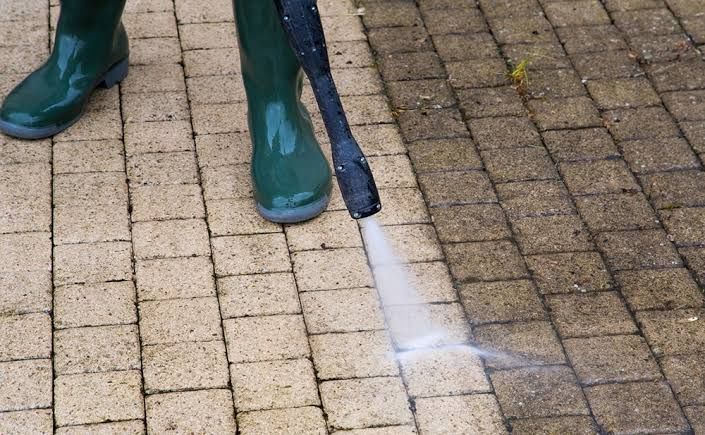
For light dirt, dust, mud and loose debris, clean water may be enough. Pressure washing works by using a strong water spray to lift and remove contamination from a surface.
However, water pressure has limits.
Some stains are bonded to the surface or contain oils and organic material that water alone does not remove easily. In those cases, detergent for pressure washing can make the cleaning process more effective.
Detergent can help loosen:
- Algae
- Moss
- General grime
- Grease
- Oil marks
- Traffic film
- Food and drink stains
- Organic dirt
- Some stubborn dark staining
The aim should not be to use the strongest chemical available. The aim should be to use the right treatment for the particular problem.
A suitable cleaning product may also reduce the need to use excessive pressure. That matters because too much pressure can damage pointing, remove jointing sand or mark softer paving.
When is clean water enough?
Clean water is often the best starting point.
If your patio or driveway has only light dirt after a period of dry weather, a pressure washer may remove most of the surface contamination without detergent.
Water can be enough for:
- Dust
- Loose soil
- Mud
- Light surface dirt
- Loose leaves and debris
- Some fresh marks
Start by sweeping the surface thoroughly. Remove leaves, stones, weeds and loose debris before using a pressure washer.
This simple preparation can make a major difference.
If the surface still looks dirty after rinsing, that is when you can consider a suitable cleaner or treatment.
On older paving, it is important not to assume that stronger pressure will always produce a better result. The pressure, water flow, equipment and cleaning product should all be matched to the surface.
What detergent is suitable for patio slabs?
The best detergent for pressure washing patio slabs depends on what the slabs are made from and what needs to be removed.
For everyday dirt, a mild patio cleaner or suitable outdoor detergent can be enough.
For algae and moss, use a patio cleaning product made for outdoor paving and follow the label instructions carefully.
For stubborn black marks, a specialist treatment may be needed.
Patio slabs are not all the same. Some are strong concrete products, while others are made from natural stone. Their porosity, texture and existing condition can vary considerably.
Before applying a new product, test it on a small hidden area. Check the colour and finish after the product has been rinsed away.
This is especially important if the patio has been sealed, painted, repaired or treated previously.
Our patio cleaning service in Bradford uses cleaning methods that are adjusted to suit the material rather than treating every patio in the same way.
What detergent is suitable for block paving?
Block paving often needs a different approach because dirt can collect on the blocks and inside the joints.
Moss, weeds and algae can grow between blocks, while vehicle traffic can leave tyre marks, oil and general grime.
A suitable paving cleaner can help loosen contamination before pressure washing.
However, the cleaning process should be controlled. Excessive pressure can disturb the sand between paving blocks.
Once block paving has been cleaned and completely dried, the joints may need fresh kiln dried sand. Whether this is required depends on the condition of the joints and how much material was lost during cleaning.
This is one reason professional driveway cleaning is often more than simply pointing a pressure washer at the surface.
Our driveway cleaning service covers the preparation, cleaning and assessment needed to give block paving a more even finish.
What should be used for concrete?
Concrete is generally a durable outdoor material, but it can still become stained and weathered.
A mild detergent can help remove ordinary dirt and grime. Heavier contamination may require a stronger concrete suitable cleaner.
Oil and grease are different.
These marks can soak into porous concrete, meaning pressure washing alone may only lighten the stain rather than remove it completely.
For oil contamination, a suitable degreasing or oil treatment may be used before washing.
Do not assume that a household kitchen cleaner will work in the same way as a product made for exterior concrete.
Concrete is a composite construction material with a cement based binder and aggregate, so its surface characteristics can vary depending on the mix and finish.
After cleaning, allow the surface to dry and inspect it again. Some stains can look less noticeable when wet and become clearer once the area dries.
What is suitable for natural stone?
Natural stone needs extra care.
Sandstone, limestone and other stone surfaces can be porous or relatively soft. Aggressive cleaning products or excessive pressure may affect the appearance of the stone.
For natural stone, choose a cleaner specifically labelled as suitable for that type of paving.
Do not automatically use bleach, strong acids or powerful degreasers simply because the stain looks difficult.
The wrong product may discolour the stone or affect an existing sealer.
A small patch test is one of the simplest ways to reduce the risk.
You should also check the manufacturer's guidance where it is available.
For older Bradford patios, condition matters just as much as the type of stone. Existing cracks, loose areas, worn joints and previous repairs should be considered before cleaning begins.
Our guide to cleaning paving stones explains why different paving materials need different cleaning methods.
Which products help remove algae and moss?
Algae and moss are common on patios and driveways, particularly where surfaces stay damp and shaded.
Bradford properties can be affected by this because garden walls, fences, trees and buildings can limit sunlight. Moisture may also remain on paving for longer in shaded areas.
Algae is a broad group of organisms, and outdoor growth can leave green, dark or slippery deposits on paving.
Moss can also take hold in joints and textured areas.
For light growth, brushing and water may be enough.
For established growth, a suitable patio or paving treatment can help loosen and control the organic material before pressure washing.
Professional cleaning may also include a treatment stage before the main wash. This can reduce the need for excessive water pressure and make the cleaning process more controlled.
You can also read our guide on how to remove moss from patio slabs safely.
Which detergent helps with grease and oil?
Oil and grease need a different type of cleaning approach.
A general patio detergent may improve the appearance of a greasy area, but a proper degreaser is usually more suitable for heavy oil contamination.
This is particularly relevant for driveways where cars are regularly parked.
Fresh oil is normally easier to treat than old oil that has had time to soak into a porous surface.
The first step is to identify the stain. Oil, grease, rust, paint and organic marks can all require different treatments.
Do not simply increase the pressure because the stain is not disappearing.
A targeted treatment followed by controlled pressure washing is often more sensible.
Pressure washing equipment can be especially useful when combined with appropriate treatments for grease and oil.
For stubborn dark marks on patios, see our guide on how to clean black spots off patio slabs.
Can household washing liquid be used?
This is one of the most common questions about detergent for pressure washing.
Mild washing up liquid can sometimes be used for simple hand cleaning of a patio, particularly when mixed with water and followed by thorough rinsing.
That does not mean it is the best product to put directly through a pressure washer.
Pressure washers can have detergent systems with specific requirements. A product that creates excessive foam may be unsuitable for the machine or may make rinsing more difficult.
Some household detergents are also designed for indoor surfaces rather than outdoor paving.
A safer approach is to use a pressure washer detergent recommended for the equipment and the surface being cleaned.
If you are cleaning by hand, mild soapy water can be useful for light dirt. For example, warm water and a small amount of mild detergent can help loosen everyday grime.
The key is not to assume that every household cleaner belongs in a pressure washer.
How should detergent be diluted?
Never guess the dilution.
The correct ratio depends on the product, the stain, the surface and the way the product is being applied.
Always read the label and follow the manufacturer's instructions.
Some products are supplied ready to use. Others need to be diluted with water. A pressure washer detergent may also be designed to mix through a downstream injector or detergent tank.
Using a stronger mixture than recommended does not automatically mean a cleaner surface.
It can increase the risk of:
- Surface discolouration
- Damage to sealants
- Plant damage
- Residue
- Irritation
- Poor rinsing
- Unnecessary chemical use
The right
detergent for pressure washing is only effective when it is mixed and applied correctly.
What does product dwell time mean?
Dwell time is the amount of time a cleaning product is left on the surface before rinsing.
It gives the product time to loosen or react with the contamination.
This does not mean you should apply a product and walk away.
The surface should normally remain wet for the recommended period. If the cleaner dries on the paving, it may become harder to rinse and could leave unwanted residue.
Weather matters here.
On a warm or windy day, the surface can dry quickly. You may need to work in smaller sections.
Do not let the cleaner dry on the surface unless the product instructions specifically tell you to do so.
The exact dwell time varies by product, so the label should always take priority.
How can plants and lawns be protected?
This is one of the most important parts of outdoor cleaning.
A patio or driveway often sits next to grass, flowers, shrubs, hedges and garden borders.
Cleaning water and detergent can travel into these areas if they are not managed carefully.
Before cleaning:
- Move plant pots away from the work area.
- Sweep away loose leaves and debris.
- Identify where the wastewater will travel.
- Use sensible control around lawns and planted borders.
- Follow the detergent manufacturer's guidance about vegetation.
- Extra care is particularly important with stronger products.
Do not assume that a chemical is harmless simply because it is sold as an outdoor cleaner.
Professional cleaners should consider plants, drainage and surrounding materials before applying treatment. Using the wrong chemical or incorrect strength can affect nearby plants and surfaces.
Are pressure washing detergents safe for pets?
Pet safety depends on the product.
A detergent that is suitable for outdoor cleaning is not automatically safe for direct contact with pets.
Keep dogs and other animals away from the work area while detergent is being applied and rinsed.
After cleaning, rinse the surface thoroughly and follow the product instructions before allowing pets back onto the area.
Do not allow pets to drink cleaning water.
If you are concerned about chemical use, ask about water based or lower chemical cleaning options.
For Bradford homeowners who prefer a gentler approach, chemical free patio cleaning is another option for suitable surfaces and levels of dirt.
Can detergent damage pointing or sealant?
Yes, the wrong product can cause problems.
Pointing and jointing materials may be weaker than the paving around them. Pressure itself can remove jointing material, while unsuitable chemicals can affect some surfaces or coatings.
Sealants can also react differently depending on their type and age.
If your patio or driveway has recently been sealed, check what cleaner the sealer manufacturer recommends.
Never assume that a product is safe simply because it says it works on paving.
The safest approach is to match the cleaner to:
- The surface material
- The stain
- The jointing
- The sealant
- The age and condition of the paving
A controlled cleaning method is much better than using maximum pressure and the strongest detergent together.
Should detergent be applied before pressure washing?
Often, yes.
Applying a suitable cleaning treatment before pressure washing can help loosen dirt and organic growth.
This can be especially useful where patios or driveways have algae, moss, lichen, heavy grime or stubborn staining.
However, the order depends on the surface and the product.
A professional may pre treat the area, allow the correct dwell time, pressure wash, inspect the surface and then apply a further treatment if necessary.
That approach is more controlled than simply turning up the pressure.
The combination of treatment and pressure can produce a better finish while helping avoid unnecessary damage.
When should a professional choose the product?
Choosing detergent for pressure washing becomes more difficult when the surface has mixed problems.
A Bradford driveway might have:
- Moss in the joints
- Green algae
- Oil around the parking area
- Tyre marks
- Old dirt
- Loose jointing sand
A patio could have sandstone slabs, black spots, algae, food stains and an old sealant.
There is no single detergent that is perfect for every situation.
A professional cleaner should inspect the surface first, identify the likely cause of the staining and then decide whether detergent is needed.
This also helps avoid unnecessary chemical use.
At Jimmy's External Cleaning Services, we provide exterior cleaning across Bradford and surrounding areas. Our approach is based on the surface, the condition and the type of contamination rather than using the same treatment on every job.
We can assess patios, driveways, paving and other outdoor surfaces and recommend a suitable cleaning process.
You can also explore our prssure washing and surface cleaning service for more information.
Choosing the best detergent for pressure washing in Bradford
The best detergent for pressure washing is not always the strongest product.
It is the product that suits the material and the stain.
For light dirt, water may be all you need.
For general grime, a mild outdoor detergent may help.
For moss and algae, a suitable organic growth treatment can be more effective.
For oil and grease, use a product designed for degreasing.
For natural stone, choose a cleaner specifically approved for the stone type.
For older, delicate or heavily stained surfaces, professional assessment may be the safest option.
Bradford weather can make outdoor surfaces dirty faster, especially in shaded areas where moisture remains for longer. Regular cleaning can help stop small problems becoming heavy moss, slippery algae and stubborn staining.
You can also learn more about how to pressure wash a patio safely and effectively.
For general background on how pressure washing works, see the Wikipedia page on pressure washing. You can also learn about the role of cleaning agents through Wikipedia's article on surfactants.
Frequently Asked Questions
What detergent can I put in a pressure washer?
Use a detergent that is designed for pressure washer use and suitable for the surface you are cleaning. Follow the machine and product instructions. Do not assume that ordinary washing up liquid is suitable for the detergent system.
Can washing liquid damage a pressure washer?
Ordinary washing liquid may create too much foam or may not be designed for pressure washer detergent systems. Check the machine manufacturer's guidance before using any household detergent.
Do I need detergent to clean a patio?
Not always. Clean water can remove light dirt and loose grime. Detergent can be helpful for algae, moss, greasy marks, heavy grime and other stubborn contamination.
Is pressure washer detergent safe for plants?
Not automatically. Safety depends on the product and how it is applied. Protect nearby plants and follow the product instructions carefully. Rinse properly and avoid allowing cleaning solutions to collect around lawns and garden borders.
Should detergent be applied before pressure washing?
Often, yes. Pre treatment can loosen dirt and organic growth before the main wash. The correct method depends on the surface, stain and detergent.
Choosing detergent for pressure washing should never be about simply finding the strongest chemical.
The best result comes from understanding the surface, identifying the stain and choosing a treatment that fits the job.
Clean water is ideal for light dirt. Mild detergents can help with everyday grime. Specialist products may be needed for moss, algae, grease, oil or stubborn black staining.
Always test new products in a small area. Follow the label. Avoid letting cleaning solutions dry on the surface. Protect plants and keep pets away while the area is being treated and rinsed.
Most importantly, do not use more pressure or stronger chemicals simply because a stain is difficult.
For homeowners in Bradford who want the job handled properly, Jimmy's External Cleaning Services can provide a practical solution for patios, driveways, paving and other exterior surfaces.
Get in touch for a professional assessment and a clear quote for your cleaning needs.
Call Jimmy's External Cleaning Services today for expert patio and driveway cleaning in Bradford. Bring tired, dirty paving back to life with the right treatment, the right pressure and a professional finish.