Roof Pressure Washing - Is It Really Safe for Roof Tiles?
A clean roof can make a Bradford home look brighter and better cared for, but cleaning a roof is very different from cleaning a driveway, patio or wall. Roof tiles have joints, overlaps, edges, mortar, flashing and other parts that need careful handling. This is why many homeowners ask an important question before booking a roof cleaning service: is Roof pressure washing actually safe?
The honest answer is that strong pressure is not suitable for every roof. The age, material, condition, pitch and construction of the roof all matter. Some roofs may be able to tolerate limited pressure in specific circumstances, while older, fragile or weathered roofs can be more vulnerable to damage.
For many Bradford homes, a safer approach may involve manual moss removal followed by soft washing or another suitable treatment. The right method should always be chosen after looking at the roof rather than assuming that one cleaning method will work for every property.
At
Jimmy's External Cleaning Services, we take this approach when helping homeowners across Bradford. We inspect the roof, consider the condition of the tiles and choose a cleaning method based on the property. Our focus is on removing moss, algae and dirt while avoiding unnecessary stress on the roof.
Is roof pressure washing safe?
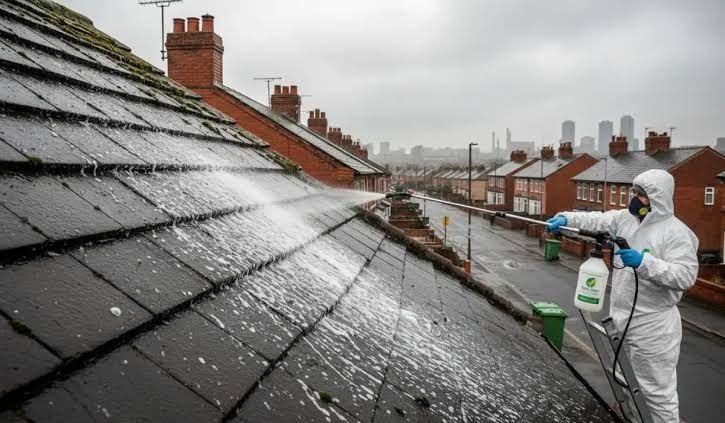
Roof pressure washing can be risky when high pressure is used without considering the roof material and condition. A pressure washer is powerful enough to remove thick dirt and moss very quickly, but that power can also create problems when directed at vulnerable roof surfaces.
Roof tiles are designed mainly to protect the building from rain and weather. They are not the same as concrete paving or a driveway. A strong water jet can place force on the tile surface, joints and overlapping areas. Depending on the roof, it may loosen material, damage an already weathered surface or force water into places where it should not go.
This does not mean every roof should never be cleaned with any water pressure. It means the cleaning method must be selected carefully. A responsible cleaner should look at the roof before deciding how it should be treated.
For many Bradford properties with moss, lichen and algae, manual removal combined with a low pressure treatment can be a more suitable option.
Our safe soft wash roof cleaning service explains how low pressure cleaning can be used to treat organic growth without relying on aggressive water pressure.
Why do homeowners consider pressure washing a roof?
The main reason homeowners consider Roof pressure washing is simple. It looks like a quick way to remove moss, dirt, algae and staining.
When moss has covered a roof for years, a pressure washer can appear attractive because the visible growth can disappear quickly. People often see pressure washing used successfully on patios, walls, garden paths and driveways and assume the same approach will work on their roof.
The problem is that a roof has a different job and a different structure.
A roof contains many areas that need to remain undisturbed so that rainwater runs away correctly. Tiles overlap one another. There may be ridge tiles, valleys, vents, flashing and mortar joints. Older roofs may also have weakened or weathered areas that cannot be identified simply by looking at a photograph.
Speed should not be the main goal of roof cleaning. A clean roof that has suffered damage during the process is not a good result.
For this reason, many professional roof cleaners prefer a controlled approach that focuses on removing organic growth without using unnecessary force.
Can strong water pressure damage roof tiles?
Yes, strong water pressure can damage some roof tiles, especially when the pressure is too high, the spray is held too close or the tiles are already weakened.
One concern is the surface of the tile. Some roof tiles have a protective outer surface that helps them resist weathering. Aggressive cleaning can affect this surface and leave the material more exposed.
Another concern is physical damage. Older clay or concrete tiles can become brittle over time. A powerful jet or careless movement across the roof can contribute to chips, cracks or movement.
There is also a risk of disturbing loose materials. A roof may look solid from the ground while having individual tiles, pointing or other areas that need attention. Cleaning can reveal these weaknesses, which is another reason an inspection should come first.
The age of the roof matters too. A relatively modern roof in good condition may behave differently from a much older roof that has experienced decades of rain, frost, wind and temperature changes.
This is why Roof pressure washing should never be treated as a standard service that is automatically suitable for every Bradford property.
The safest approach is to inspect first, identify the roof material and condition, then select a cleaning method that provides a good result without unnecessary force.
Can water be pushed beneath roof tiles?
This is another important concern when discussing Roof pressure washing.
Roof tiles are arranged to shed water from one tile to the next. During normal rainfall, water follows the designed path across the roof and into the guttering. Strong jets of water are different from natural rainfall because they can be directed upwards, sideways or into gaps and overlaps.
If a pressure washer is used from the wrong angle, water can potentially be driven into areas that would not normally receive that type of force.
That does not mean one blast of water will automatically cause a leak. Roof construction is designed to deal with weather. The concern is that aggressive cleaning can introduce water to the roof in a way that the system was not designed to handle.
The risk can be greater around tile overlaps, roof edges, vents, flashing, ridges and areas with existing defects.
A careful cleaner should understand where water can safely go and where it needs to be kept away. Low pressure systems can reduce this concern because they rely more on controlled treatment than force.
Can pressure washing affect mortar and pointing?
Yes. Mortar and pointing can be vulnerable to aggressive cleaning, particularly when they are already cracked, loose or weathered.
Many roofs contain mortar around ridge tiles, verges and other sections of the roof. Over time, weather can cause this material to deteriorate. A strong water jet can make an existing weakness worse or dislodge material that was already loose.
This can leave more maintenance work after the cleaning has finished.
A good roof cleaner should look at the pointing during the inspection. If the mortar is already in poor condition, cleaning may need to be adjusted. In some cases, repairs should be considered before the roof is cleaned.
The same principle applies to other roof features. Flashing, seals, vents and joins may need attention before any cleaning begins.
Roof cleaning should therefore be approached as part of general roof maintenance rather than simply a cosmetic pressure washing job.
Are older tiles more vulnerable?
Older tiles deserve extra care.
Bradford has many older homes, including traditional terraces and properties that have seen decades of changing weather. A roof may have been exposed to repeated rainfall, frost, high winds and temperature changes for many years.
Age does not automatically mean that a roof cannot be cleaned. It does mean the condition needs to be assessed properly.
An older roof may have minor cracks, loose tiles, weakened mortar or surface wear that are not obvious from the ground. Using strong water pressure on such a roof can increase the chance of damage.
The same applies to roofs that look clean but have hidden problems. A careful inspection can reveal slipped tiles, damaged edges, weak pointing or areas where moss has become heavily established.
At
Jimmy's External Cleaning Services, the roof condition is an important part of deciding how cleaning should be carried out. We do not believe that every roof needs the same treatment.
Can slate roofs be pressure washed?
Slate roofs require particular care because natural slate is not identical to concrete or clay roof tiles.
Slate is a natural stone and can vary in thickness, quality and condition. Older slate roofs may also have aged fixings and other components that need to be considered before cleaning.
A strong pressure washer is generally not the first method to consider when dealing with a delicate slate roof. The condition of the slates, fixings and surrounding roof structure needs to be assessed first.
Some slate roofs may be suitable for careful cleaning, but the method should be chosen according to the roof rather than based on a standard pressure washing process.
For homeowners unsure about their roof material, the safest option is to have it inspected by an experienced professional before cleaning begins.
You can also learn more about slate as a natural roofing material through Wikipedia's page about slate.
What is manual roof moss removal?
Manual roof moss removal is a careful process where visible moss is removed using suitable hand tools rather than relying on strong water pressure.
This is often useful when moss has built up heavily on roof tiles. Instead of blasting the growth away, the cleaner carefully lifts and removes the moss while trying to avoid unnecessary contact with the tile surface.
The method may involve suitable scrapers, soft brushes, extension poles and collection equipment. The exact tools depend on the roof.
Manual cleaning can take longer than pressure washing, but roof care is not always about doing a job as quickly as possible. Careful removal can help reduce the risk of unnecessary damage, especially on older or delicate roofs.
Our guide to roof cleaning equipment explains why the right equipment matters when working with different roof surfaces.
Moss should also be managed carefully because large amounts can fall into gutters during cleaning. Clearing this debris is an important part of finishing the job properly.
What is soft wash roof cleaning?
Soft washing is a low pressure method of cleaning that uses a suitable treatment to deal with organic growth such as moss, algae and lichen.
Instead of relying on force to strip everything from the roof, the treatment does much of the cleaning work. Loose moss may be removed manually first, followed by a suitable treatment designed for the remaining organic growth.
This method can be useful for many Bradford roofs because it avoids the aggressive force associated with high pressure cleaning.
Soft washing is not a universal answer either. A roof still needs to be inspected before treatment. The roof material, existing damage, nearby plants, weather conditions and drainage all need to be considered.
Our safe soft wash roof cleaning service provides more information about how this approach is used by
Jimmy's External Cleaning Services in Bradford.
Is soft washing safer than roof pressure washing?
For many suitable roofs, soft washing can be a safer choice than high pressure cleaning because it uses much less physical force.
The difference is important.
Pressure washing depends heavily on the force of the water.
Soft washing depends more on a controlled cleaning treatment and gentle methods.
This can make soft washing a better option where roof tiles are older, weathered or otherwise vulnerable. It may also be more suitable where moss and algae need to be treated rather than simply blasted from the surface.
However, it would be wrong to say that soft washing is automatically suitable for every roof. The safest cleaning method depends on the property.
The condition of the tiles should always come first.
How does treatment help control regrowth?
Removing visible moss is only part of roof cleaning. Small traces of organic growth can remain on the surface, especially where the roof is damp or shaded.
A suitable roof treatment can help deal with remaining organic growth and reduce how quickly it returns.
This matters in Bradford because local conditions can favour moss and algae. Shaded roof sections can stay damp for longer. Nearby trees can drop leaves and organic material onto the roof. Cool and wet weather can also create favourable conditions for growth.
A roof surrounded by trees may therefore develop moss again more quickly than an open roof exposed to sunlight and airflow.
Treatment can help, but it does not make a roof permanently resistant to moss.
Good roof maintenance is about controlling the problem and keeping an eye on the roof over time.
Should gutters be cleaned after roof work?
Yes. Gutter cleaning should be considered an important part of roof maintenance after moss removal.
When moss is removed from a roof, some material can fall into the gutters. Leaves, dirt and loose organic debris may already be present there. Adding more debris can create a blockage and stop rainwater flowing properly.
Blocked gutters can result in overflowing water, staining, damp areas and other avoidable problems.
This is why roof cleaning and gutter maintenance often work well together.
Our Gutter Cleaning Bradford service helps homeowners keep their guttering clear and working properly.
A combined approach can be particularly useful for homes surrounded by trees or roofs with heavy moss growth.
For more information about the connection between the two services, see our roof and gutter cleaning service in Bradford.
How is a roof inspected before cleaning?
A proper inspection is one of the most important parts of safe roof cleaning.
The process should begin by looking at the roof from a safe position. The cleaner can assess the general condition, the amount of moss, the roof material, visible cracks, slipped tiles, mortar, access and nearby structures.
The surrounding property also matters.
Windows, walls, conservatories, paths, patios, driveways, garden areas, vehicles and plants may need protection depending on the cleaning method.
Access is another major consideration. A low roof may be easier to work on than a steep or tall roof. Some roofs can be treated from the ground using long reach equipment, while others may require suitable access equipment.
Weather should also be considered. Strong winds, heavy rain and unsuitable conditions can make roof cleaning more difficult and less safe.
A good inspection allows the cleaner to decide whether cleaning is appropriate and what method should be used.
What safety equipment is needed?
Roof cleaning involves working around height, wet surfaces, tools and falling debris, so the right safety equipment matters.
The exact equipment depends on the property, but professional roof cleaning may require suitable non slip footwear, gloves, eye protection, protective clothing, ladders, roof access equipment, barriers and other working at height equipment.
The roof itself must also be treated as a safety issue. Wet moss can be slippery. Old tiles may break under load. Steep slopes create additional risks.
This is one reason DIY Roof pressure washing can be a poor choice for homeowners who do not have suitable training and equipment.
Roof cleaning is not simply a case of climbing a ladder and pointing a pressure washer upwards. A safe service needs planning before the first tile is cleaned.
How long do roof cleaning results last?
There is no fixed answer because every roof is different.
A roof under mature trees may develop moss again sooner because leaves and moisture remain on the surface. A roof with strong sunlight and good airflow may stay cleaner for longer.
The original condition of the roof also matters. A light clean may have a different maintenance cycle from a roof that has had heavy moss growth for many years.
Soft wash treatment can help slow regrowth, but it should not be described as a permanent solution. Regular inspection and simple maintenance can help keep a roof in better condition over time.
At
Jimmy's External Cleaning Services, we explain that roof cleaning results depend on the property and its surroundings. This gives homeowners a more realistic expectation than promising that a roof will remain completely moss free for a set number of years.
What is the safest option for Bradford properties?
For many Bradford homes, the safest option is likely to be a careful combination of manual moss removal and low pressure soft washing, but this should not be assumed without checking the roof first.
A roof with heavy moss may benefit from manual removal before treatment.
A roof with algae staining may require a suitable soft wash treatment.
An older roof may need a gentler approach.
A damaged roof may need repairs before cleaning.
A slate roof may require specialist consideration.
A roof with difficult access may need different equipment or may not be suitable for cleaning until safer access is available.
This is why there is no single cleaning method that should be recommended for every property.
Bradford homeowners also need to consider the local environment. Shaded roof slopes, nearby trees, damp conditions and regular rainfall can all contribute to moss and algae growth.
The best solution is the one that considers the roof as a whole.
Can you pressure wash roof tiles?
Some roof tiles may tolerate carefully controlled cleaning, but strong pressure should not automatically be used on every roof.
The tile material, age, condition and construction all matter. A professional should inspect the roof before selecting the cleaning method.
For many Bradford properties, manual moss removal and low pressure soft washing may provide a safer alternative to aggressive cleaning.
Does pressure washing remove the protective surface of tiles?
It can affect the surface of some roofing materials when excessive pressure or an unsuitable cleaning method is used.
The condition of the tile matters. Older or weathered tiles may be more vulnerable than newer tiles in good condition.
This is one reason homeowners should avoid treating roof tiles in the same way as hard paving.
Is soft washing safer than roof pressure washing?
For many suitable roofs, soft washing is considered a gentler option because it uses low pressure and controlled treatment rather than relying on a powerful water jet.
It still requires proper application and an inspection first. No cleaning method should be described as suitable for every roof.
What is the safest way to remove roof moss?
For many roofs, careful manual moss removal followed by a suitable soft wash treatment is a sensible approach.
The method should be adjusted according to the roof material, age, condition, moss level and access.
Our guide to cleaning moss from a roof explains the importance of inspection, careful moss removal, treatment and gutter clearing.
How much does roof cleaning cost in Bradford?
There is no single roof cleaning price because the final cost depends on the size and condition of the roof, the amount of moss, access, roof height, materials and the cleaning method required.
A heavily covered roof may need more manual work than a roof with light staining. Difficult access can also affect the amount of equipment and time required.
The best way to get an accurate figure is to have the roof assessed and receive a clear quote based on the actual work needed.
Why choose Jimmy's External Cleaning Services for roof cleaning in Bradford?
This is paragraph Jimmy's External Cleaning Services provides roof cleaning for homeowners across Bradford and surrounding areas.
We understand that homeowners want their roofs to look clean, but safety and care are just as important as appearance.
Our approach focuses on assessing the roof first, choosing a suitable method and avoiding unnecessary pressure wherever possible. Where appropriate, we can use manual moss removal and soft washing to deal with moss, algae, lichen and staining.
We also consider the areas around the property, including gutters, walls, windows, paths, gardens and nearby vehicles.
The aim is simple. Give homeowners a cleaner roof without taking unnecessary risks with the roof surface.
If you are considering Roof pressure washing because your roof has become heavily covered in moss, it is worth looking at the alternatives before choosing a cleaning method.
A powerful water jet may look like the quickest answer, but the quickest method is not always the safest method.
For many Bradford homes, careful moss removal and soft washing can offer a more controlled approach.
text. Click it or hit the Manage Text button to change the font, color, size, format, and more. To set up site-wide paragraph and title styles, go to Site Theme.
Safe roof cleaning for Bradford homes
A roof should never be cleaned simply because a pressure washer is available.
Every property is different. Tile material, age, condition, moss growth, roof pitch, nearby trees, shade and access all affect the decision.
If your roof is covered with moss, algae or lichen, Jimmy's External Cleaning Services can assess the condition and help you understand the most suitable cleaning option.
Our service covers Bradford and surrounding areas, with a focus on careful exterior cleaning and practical advice.
Before choosing Roof pressure washing, ask whether the method is suitable for your specific roof. In many cases, a gentler solution can provide the clean appearance you want while reducing unnecessary stress on the tiles.
A safer roof cleaning decision starts with a proper inspection.
Ready to protect your Bradford roof and restore its clean appearance? Contact Jimmy's External Cleaning Services for a careful roof assessment and a clear quote.