Pressure Washing With a Surface Cleaner- Powerful Bradford Guide
A dirty driveway can make an otherwise well kept property look tired. Dirt, moss, algae, tyre marks, mud and weather stains can build up slowly, especially on outdoor surfaces exposed to Bradford weather. Pressure washing can remove much of this buildup, but the way the machine is used matters just as much as the power of the equipment.
Pressure washing with surface cleaner is a popular method for cleaning large flat areas because it gives a more even result than using a pressure washer lance alone. A surface cleaner has rotating jets underneath a protective housing. As the cleaner moves across the surface, the jets clean a consistent area and help reduce the uneven marks that can happen with a single pressure washer nozzle.
A good result does not come from simply turning the machine on and moving it around. The surface needs to be inspected, loose dirt needs to be removed, stains may need treatment, pressure needs to be tested, and the cleaning passes need to be controlled. Block paving may also need fresh jointing sand after cleaning.
For homeowners in Bradford, this careful approach can make a noticeable difference to driveways, patios, paths and paved areas. Jimmy's External Cleaning Services provides professional exterior cleaning across Bradford and can assess the surface before choosing the most suitable cleaning method.
What equipment is needed?
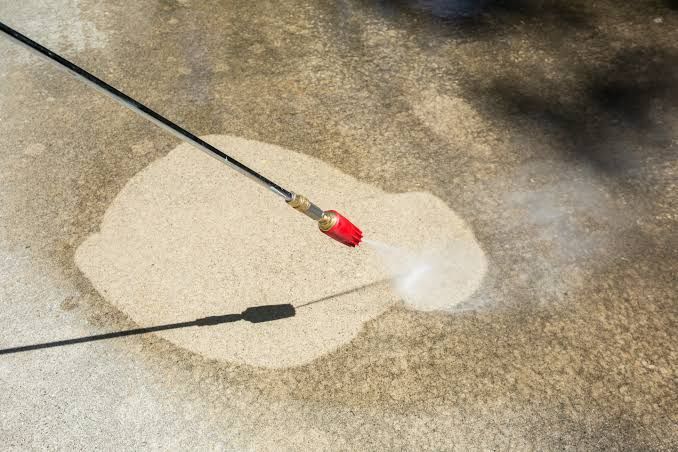
The basic equipment for pressure washing with surface cleaner includes a suitable pressure washer, a surface cleaner attachment, high pressure hose, water supply and appropriate cleaning products.
A surface cleaner normally has a round housing with rotating spray jets underneath. The housing helps control the spray while the rotating bar creates a more consistent cleaning pattern. This is especially useful on broad areas such as driveways and patios.
Depending on the job, other equipment may include a stiff outdoor brush, weed removal tools, protective clothing, eye protection, suitable footwear, a pressure washer lance and a clean water hose for final rinsing.
The machine should also have enough water flow for the surface cleaner being used. Pressure alone is not the whole story. A machine with strong pressure but poor water flow may not operate a larger surface cleaner effectively.
You can learn more about how this equipment works in our detailed guide to Surface Cleaner Pressure Washing.
The main aim is to use enough cleaning power to remove dirt without using unnecessary force that could damage the surface.
Which surfaces should be inspected first?
Before pressure washing with surface cleaner, always inspect the surface.
The first question is what material you are cleaning. Concrete, block paving, natural stone, sandstone, porcelain, tarmac and other surfaces can respond differently to pressure washing.
Concrete that is sound and in good condition can often be cleaned effectively. Block paving can also respond well, but the joints need particular attention because the cleaning process can move jointing sand.
Tarmac needs a more careful approach because excessive pressure can loosen or damage the surface. Natural stone should also be assessed because some stone is softer or more porous than others.
Look for cracks, loose sections, damaged edges, raised blocks, weak pointing, sinking areas and existing surface damage. If a paving slab is already loose, pressure washing will not solve the underlying problem.
Also check drainage points, nearby walls, doors, garage entrances and outdoor features. This helps prevent dirty water from being pushed into unwanted areas.
If the surface is delicate, heavily damaged or unstable, a gentler cleaning method may be more appropriate.
How should the area be prepared?
Good preparation makes pressure washing with surface cleaner easier and safer.
Start by removing vehicles, plant pots, garden furniture, toys and other objects from the area. Sweep away loose leaves, stones, twigs and surface dirt.
Weeds should also be removed where possible, especially when they are growing strongly between block paving joints. Loose growth can be easier to remove before the main wash.
Protect delicate plants and move items that could be affected by dirty water or cleaning products. Make sure doors and garage entrances are closed where appropriate.
Check where the wastewater will go. You do not want large amounts of muddy water flowing into a neighbouring property or collecting against a building.
For a Bradford driveway, preparation can be particularly important after periods of wet weather. Moss and organic growth can become heavy in shaded areas, while soil and debris can collect around edges and drainage points.
A properly prepared surface gives the cleaner a clear working area and makes it easier to see how much cleaning is actually needed.
Should stains be treated before cleaning?
Not every stain can be removed by pressure alone.
This is one of the most important points to understand before starting pressure washing with surface cleaner.
Moss, algae, general dirt and loose organic growth may respond very well to mechanical cleaning. Oil, grease, rust and deep staining can be different.
A suitable treatment may be needed before the surface cleaner is used. The correct product depends on the stain and the surface material.
Oil marks on a driveway may need degreasing treatment. Organic growth may benefit from an appropriate outdoor cleaner. Some stains can be deep in porous paving and may not disappear completely after one clean.
Never assume that more pressure will solve every stain. Increasing pressure can damage a surface without necessarily removing a deeply embedded mark.
This is why experienced exterior cleaners look at the stain first and decide whether treatment, mechanical cleaning or a combination of methods is appropriate.
For more information about caring for paved surfaces, see our guide to How to Clean Paving Stones.
How is the surface cleaner connected?
The surface cleaner connects to the pressure washer through the high pressure hose and suitable fittings.
Before starting, check that the connection is secure and that the equipment is compatible. The surface cleaner should be connected according to the manufacturer's instructions.
The pressure washer should normally be started before placing the cleaner onto the area to be washed. Water flow should be established first.
Once the equipment is running correctly, place the surface cleaner onto the surface and slowly activate the cleaning action.
Do not force the machine forward. The rotating jets need time to work against the dirt.
A surface cleaner should move smoothly and consistently. If the machine is bouncing, pulsing or behaving unevenly, stop and check the equipment rather than continuing.
How should water pressure be tested?
Testing is essential before beginning a large area.
Start in a small, less noticeable section. This allows you to see how the surface responds to the selected pressure and cleaning method.
The goal of pressure washing with surface cleaner is not to use the maximum pressure available. The aim is to find the lowest effective pressure that gives a satisfactory result.
Watch the surface carefully.
On block paving, excessive pressure may disturb jointing sand. On tarmac, aggressive cleaning may loosen the surface. On older concrete, damaged sections may become more visible after cleaning.
Adjust the pressure, distance, machine speed or cleaning approach as required.
The test area can also reveal differences in colour. A dirty surface may look uniform before cleaning but show previous repairs, faded sections or old damage once the dirt has been removed.
What is the correct walking speed?
Walking speed makes a major difference to the finish.
Moving too quickly may leave dirt behind. Moving too slowly can put unnecessary pressure on the surface and may create a visibly cleaner section than the surrounding area.
There is no single speed that works for every driveway because the correct movement depends on the machine, surface, level of dirt, water flow and cleaning power.
A steady walking pace is usually the best approach.
Move slowly enough for the rotating jets to clean the surface properly but not so slowly that the cleaner remains in one place for too long.
When learning
pressure washing with surface cleaner, beginners often concentrate on machine pressure but forget about movement. Consistent movement is equally important.
How should overlapping passes be made?
Overlapping passes help create a more even finish.
Move the surface cleaner in straight, controlled lines. Each new pass should slightly overlap the previous pass.
This prevents narrow dirty strips from being left between cleaning sections.
Think of the process as gradually covering the driveway in connected sections rather than randomly moving the cleaner from one place to another.
For larger driveways, work in manageable sections. Finish one section before moving too far away from it.
This approach also makes it easier to identify areas that need another pass.
The same principle applies to patio cleaning. You can learn more about the correct approach on our Patio Cleaning Services Bradford page.
How are edges and corners cleaned?
A round surface cleaner is designed mainly for broad, reasonably flat areas. It may not reach every edge and corner.
This is where a pressure washer lance can be useful.
Once the main area has been cleaned, use the appropriate lance and nozzle for edges, corners, steps and awkward sections.
However, extra care is needed around walls, doors, pointing and delicate surfaces. Do not aim a strong concentrated jet directly at weak mortar or fragile joints.
Edges should be cleaned in a controlled way so that dirt is not simply pushed back onto the already cleaned surface.
Good finishing work often makes the difference between an average cleaning job and a professional looking result.
How can visible lines be prevented?
Striping or visible lines can happen when the cleaner is moved unevenly, passes do not overlap correctly or the machine is held in a way that creates inconsistent cleaning.
This is one reason pressure washing with surface cleaner is different from simply moving a lance across a driveway.
Keep the surface cleaner level. Maintain a steady movement speed and overlap each pass slightly.
Do not stop suddenly in the middle of a section. Avoid holding the cleaner in one place while the jets are rotating.
If the surface is heavily soiled, more than one controlled pass may be needed.
After the main clean, look at the area from different angles. Some marks can be difficult to see while the surface is wet but become obvious as it starts to dry.
How is dirty water rinsed away?
After the main cleaning stage, dirty water and loose debris need to be cleared.
The final rinse helps remove remaining sediment, loosened moss, dirt and cleaning residue.
Work with the natural direction of drainage where possible. Avoid pushing muddy water toward doors, garages, neighbouring properties or areas where it could cause a problem.
On a block paved driveway, the rinse should also be controlled around joints so that unnecessary amounts of sand are not removed.
A final visual inspection should follow the rinse.
Look for missed sections, remaining stains, dirty edges and areas that may need another pass.
This is also the stage when the true condition of the surface becomes easier to see.
Is post treatment necessary?
Post treatment depends on the surface and the type of dirt that was present.
Organic growth such as moss and algae can return when conditions remain damp and shaded. A suitable treatment may help reduce regrowth when correctly selected and applied.
However, post treatment should not be viewed as a replacement for cleaning.
The surface needs to be properly cleaned first. Any treatment should be appropriate for the material and used according to product instructions.
Regular sweeping and removing leaves can also help reduce the buildup of organic matter.
Keeping drainage clear is another useful step. Standing water can make outdoor surfaces stay damp for longer.
When does block paving need new sand?
Block paving may need new jointing sand after pressure washing with surface cleaner.
This is because cleaning can remove some of the loose sand from the joints between the blocks.
Once the driveway has been cleaned and is completely dry, fresh suitable jointing sand can be swept into the gaps.
The sand should be worked carefully into the joints until they are properly filled. Excess material can then be removed from the surface.
Re sanding is not simply about making the driveway look neat. Properly filled joints help support the blocks and can reduce movement.
The amount of sand lost during cleaning varies from driveway to driveway. Older paving, wide joints and heavy cleaning may mean that more restoration work is required.
Our Driveway Sealing and Re Sanding service page explains how re sanding and sealing can form part of a wider driveway restoration process.
How long should the surface dry?
This isDrying time depends on weather, temperature, sunlight, humidity, airflow and the material being cleaned.
Block paving should be fully dry before re sanding because damp joints can prevent the sand from settling correctly.
Drying is especially important before any sealing work.
A driveway that looks dry on the surface may still hold moisture within joints and porous materials. Rushing the next stage can affect the final finish.
For sealing, always follow the product manufacturer's drying requirements. Weather conditions can change the expected drying period.
Bradford weather can be unpredictable, so planning matters. A clean and dry day is preferable when further restoration work is required after washing.
paragraph text. Click it or hit the Manage Text button to change the font, color, size, format, and more. To set up site-wide paragraph and title styles, go to Site Theme.
Should the surface be sealed afterwards?
Sealing is not always necessary, but it can be useful for some driveways.
A suitable sealer may help protect certain surfaces from staining, weather exposure and organic growth. It can also improve the appearance of some block paving and make future maintenance easier.
However, sealing is not a universal solution.
The correct product depends on the surface. Concrete, block paving, natural stone and other materials have different requirements.
The driveway should be properly cleaned and completely dry before sealing. Block paving may also need re sanding first.
If you are considering this step after cleaning, our Driveway Sealing Bradford page explains the process in more detail.
A Bradford driveway example
Imagine a block paved driveway in Bradford that has not been cleaned for several years.
The surface has green algae, moss around the edges, dark marks and weeds growing between some of the blocks. Jointing sand has also become low in several areas.
The first step is inspection.
The driveway is checked for loose blocks, cracks, weak joints, drainage problems and areas that may need a gentler method.
Next, loose debris and weeds are removed. Heavier stains are assessed and treated where appropriate.
The pressure washer and surface cleaner are then tested on a small area. The pressure is adjusted to achieve a good result without causing unnecessary damage to the paving or joints.
The driveway is cleaned in steady overlapping passes. Edges and corners are completed separately using suitable equipment.
After the main cleaning stage, the dirty water is rinsed away and the whole surface is inspected again.
Once the block paving has dried fully, missing jointing sand can be replaced. The sand is brushed into the joints and excess material is cleared away.
If the homeowner wants additional protection and the paving is suitable, sealing can then be considered.
The result is not simply a cleaner driveway. The full process also identifies problems that may have been hidden beneath moss, dirt and algae.
For Bradford homeowners, this is one of the advantages of choosing a complete exterior cleaning approach rather than only washing the surface and leaving the rest unfinished.
Can you use a surface cleaner on block paving?
Yes, a surface cleaner can be used on many block paved areas, but care is important.
Block paving has individual blocks with joints between them. Too much pressure can remove jointing sand, disturb loose blocks or affect weak areas.
The cleaning method should therefore be adjusted to suit the condition of the driveway.
After pressure washing with surface cleaner, the joints should be checked. If sand has been removed, re sanding may be required once the surface is fully dry.
Our guide to How to Clean Block Paving Like a Professional covers this part of the process in more detail.
Pressure washing with surface cleaner can be an effective way to clean large flat outdoor surfaces, but the best results come from using the right process from beginning to end.
Inspection comes before cleaning. Preparation comes before pressure. Stains may need treatment.
Pressure should be tested rather than guessed. Cleaning passes should overlap, movement should stay steady and edges should be finished carefully.
After cleaning, the surface needs a proper rinse and inspection. Block paving may need new sand, while some suitable surfaces may benefit from sealing after they are fully clean and dry.
For homeowners in Bradford, a well planned driveway clean can improve the appearance of the property and make the outdoor area easier to maintain.
Jimmy's External Cleaning Services provides driveway, patio and exterior cleaning services across Bradford. When the surface needs more than a quick wash, choosing the correct equipment and method can make a major difference.
For general background on how pressure washing works and how surface cleaners operate, you can also read the Pressure Washing article on Wikipedia.
Ready to restore your Bradford driveway?
A cleaner driveway starts with the right inspection and the right method. Jimmy's External Cleaning Services can assess your outdoor surface and explain whether cleaning, re sanding, sealing or a combination of treatments is suitable.
Visit Jimmy's External Cleaning Services to learn more or request a quote for your Bradford property.