Pressure Washing With Hot Water - When Does It Work Best?
Pressure washing is a useful way to clean outdoor surfaces, but ordinary cold water is not always the best option for every type of dirt. Some stains are made harder to remove because they contain grease, oil or other sticky substances. This is where pressure washing with hot water can offer an important advantage.
Heated water can help loosen greasy and oily contamination before the pressure washer removes it. However, that does not mean hot water is always better. For many homes in Bradford, cold water pressure washing is perfectly suitable for mud, dust, algae, moss and ordinary surface dirt.
The best cleaning method depends on the surface, the type of contamination, the age of the stain and the condition of the material.
Jimmy's External Cleaning Services provides exterior cleaning services across Bradford and nearby areas. Our approach is based on looking at the surface first and choosing a suitable cleaning method rather than assuming that stronger pressure or hotter water is always the answer.
This guide explains where
pressure washing with hot water can help, when cold water is enough and what property owners should consider before cleaning.
What Is Hot Water Pressure Washing?
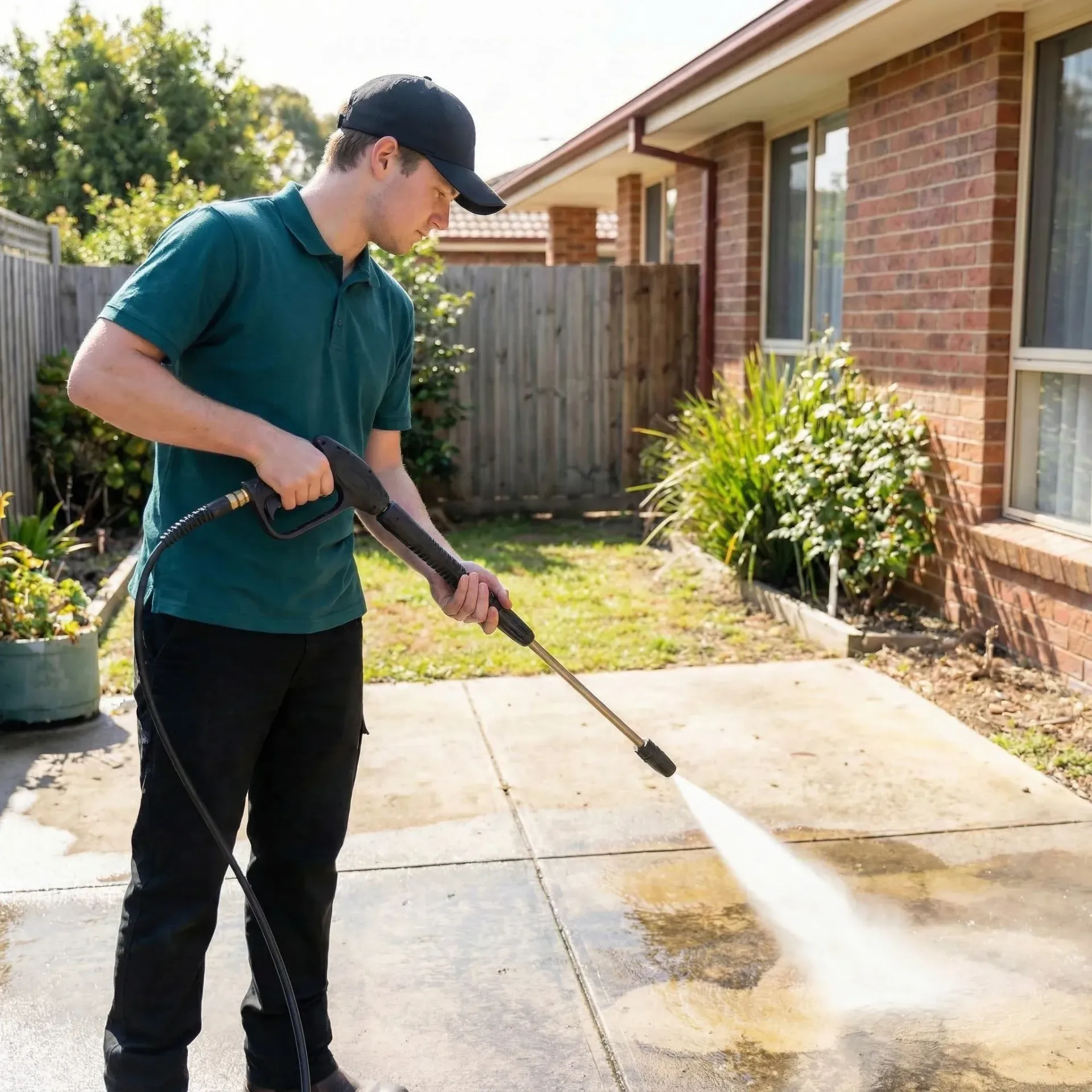
Pressure washing with hot water uses heated water together with controlled water pressure to clean suitable outdoor surfaces.
A standard cold water pressure washer relies on water pressure to loosen and remove dirt. A hot water system adds heat, which can help soften certain types of contamination.
Heat is particularly useful when the surface contains:
• Oil
• Grease
• Vehicle residue
• Food related grease
• Sticky deposits
• Heavy traffic film
• Some industrial contamination
Hot water can make oily contamination easier to break down. This can be useful on suitable concrete areas, commercial yards, service areas and other locations where normal outdoor dirt is mixed with grease or oil.
However, heat is not a substitute for proper pressure control. Using too much pressure can damage some surfaces even when the water temperature is suitable.
For more general information about how pressure washing works, you can also read the
Wikipedia guide to pressure washing.
How Is the Water Heated?
A hot water pressure washing machine has a heating system that raises the temperature of the water before it reaches the cleaning nozzle.
Many professional hot water systems use a burner to heat the water. The exact design depends on the machine and fuel system.
The result is a stream of heated water delivered under controlled pressure.
The operator must select suitable settings for the surface and the type of contamination. The temperature, pressure, nozzle, water flow and cleaning method all affect the result.
This is important because higher settings are not automatically better.
A heavily stained concrete yard may need a different approach from an older stone surface. The correct cleaning method should always consider the material before the machine is used.
Why Does Heat Help Remove Grease?
One of the main benefits of pressure washing with hot water is its ability to deal with oily contamination.
Grease can cling strongly to hard surfaces. Cold water may remove loose dirt around the grease while leaving a visible oily film behind.
Heat helps soften and loosen greasy deposits. Once the contamination has been loosened, the pressure of the water can help lift it from the surface.
This can make hot water useful in areas affected by:
• Oil leaks
• Grease deposits
• Workshop contamination
• Vehicle fluids
• Food grease
• Heavy traffic residue
Concrete is commonly found in these areas and is naturally porous. Oil can move into the surface rather than staying entirely on top.
For this reason, hot water cleaning may improve the appearance of an oil affected surface, but complete stain removal cannot always be guaranteed.
The age of the stain is important. A recent surface spill may be much easier to treat than contamination that has remained in porous concrete for months or years.
Can Hot Water Remove Oil Stains From Concrete?
Yes, hot water can help remove oil and grease from suitable concrete surfaces, but it may not remove every old stain completely.
This is one of the most common reasons businesses consider pressure washing with hot water.
The heat can soften the oily residue while pressure helps remove the loosened contamination.
In some situations, a suitable cleaning product may also be used. This depends on the type of oil, the surface and the surrounding environment.
It is important not to promise perfect results before inspecting an oil stain. Concrete can absorb oil, especially when the surface is old or porous.
Jimmy's External Cleaning Services already takes a surface first approach to pressure washing across Bradford. Our pressure washing surface cleaning service explains why pressure, equipment and surface condition all need to be considered together.
Is Hot Water Useful For Chewing Gum?
Chewing gum can be difficult to remove because it sticks firmly to hard surfaces.
Heat can soften the gum, which may make it easier to remove from suitable hard surfaces when the correct equipment and technique are used.
This can be particularly useful around busy commercial areas where chewing gum has built up over time.
However, the operator still needs to consider the surface below the gum.
Old concrete, paving, painted areas, coatings and delicate materials can react differently to heat and pressure.
The goal is to remove the gum without damaging the surface around it.
Jimmy's commercial pressure washing information explains that chewing gum can be among the difficult contamination found on business entrances, paths, forecourts and other commercial areas.
You can read more about this through our commercial pressure washing Bradford service.
Which Commercial Areas Can Benefit From Hot Water?
Commercial properties can face more difficult contamination than a typical domestic patio.
Bradford businesses with vehicle movements, deliveries or food related activity may experience heavier levels of grease, oil and traffic residue.
Suitable examples can include:
• Forecourts
• Service yards
• Workshops
• Vehicle areas
• Loading spaces
• Commercial entrances
• Restaurant outdoor areas
• Industrial yards
• Car parking areas
A forecourt can collect fuel related contamination, tyre marks and general traffic dirt. A workshop may have grease and oil deposits. A service yard may have a mixture of mud, vehicle residue and other contamination.
These are situations where pressure washing with hot water may be more useful than cold water alone.
However, not every commercial site needs heated water. A relatively clean concrete path covered mainly with ordinary dirt may be cleaned effectively with cold water.
Is Hot Water Needed For Normal Dirt and Mud?
Usually not.
This is one of the most important points to understand about pressure washing with hot water.
Hot water is not necessary simply because a surface is dirty.
Cold water pressure washing can be highly effective against:
• Mud
• Dust
• Loose soil
• Leaves
• General outdoor dirt
• Algae
• Moss
• Surface grime
For example, a Bradford patio covered with winter mud may not need heated water. The pressure and suitable equipment can remove loose contamination without the extra heat.
Using the simplest suitable method can make sense.
Jimmy's pressure washing chemicals guide also explains that not every cleaning job requires additional products. The same principle applies to heat.
The cleaning method should match the problem.
Which Surfaces Need Extra Care?
Not every surface should be exposed to high temperature and high pressure without consideration.
Extra care may be needed with:
• Older block paving
• Natural stone
• Painted surfaces
• Coated surfaces
• Resin surfaces
• Tarmac
• Older concrete
• Delicate wall materials
• Surfaces with existing sealants
The condition of the surface matters as much as the material.
A new and strong concrete surface may respond differently from an old surface with cracks and previous repairs.
Natural stone is another example. Different types of stone have different properties, so a cleaning method suitable for one material may not be appropriate for another.
A responsible cleaner should assess the surface before deciding whether heat is appropriate.
Can Hot Water Damage Sealants or Coatings?
Yes, heat can affect some coatings, sealants and surface treatments.
The risk depends on the product, temperature, age, condition and cleaning method.
This is why a sealed driveway should not automatically be treated in the same way as an unsealed concrete yard.
Before pressure washing with hot water, the operator should consider whether the surface has:
• A protective coating
• A sealant
• Decorative treatment
• Paint
• Previous restoration work
• Surface repairs
A small test area may help determine how the material reacts.
The safest approach is to use the lowest suitable temperature and pressure needed to achieve the cleaning result rather than treating every surface with maximum settings.
Does Hot Water Reduce The Need For Strong Chemicals?
It can sometimes help reduce the amount of chemical assistance required, particularly when heat itself helps loosen grease and oil.
However, it does not mean that hot water completely replaces cleaning products.
Different contamination requires different methods.
Light dirt may only need water.
Oil or grease may respond better to heated water and an appropriate cleaning treatment.
Moss and algae may need a suitable biological treatment rather than simply more pressure.
The important point is to avoid adding chemicals when they are not needed and avoid using excessive pressure simply because the surface is difficult to clean.
Our guide to pressure washing chemicals explains why product selection should depend on the contamination and surface.
Is Hot Water Cleaning More Expensive?
It can be.
Hot water equipment is more complex than a basic cold water system because it has additional heating components, fuel use and operating requirements.
The final cost can also depend on:
• Size of the area
• Type of surface
• Amount of contamination
• Access
• Water supply
• Drainage
• Required temperature
• Cleaning products
• Working time
• Site safety requirements
However, the cheapest cleaning method is not always the best value.
If a commercial yard contains heavy grease, spending more time using cold water may not produce the same result as using a suitable heated cleaning method.
On the other hand, using hot water on a lightly dirty patio may offer little practical benefit.
Jimmy's pressure washing prices in Bradford explains why local cleaning prices depend on the actual property rather than one fixed rate.
When Is Cold Water The Better Choice?
Cold water is often the better choice when the contamination is ordinary dirt and the surface does not need heat.
For many residential cleaning jobs, cold water pressure washing can be enough.
This can include:
• Driveways with normal dirt
• Garden paths
• Patios
• Concrete paths
• Light mud
• Loose soil
• General outdoor grime
The main advantage is simplicity.
There is no need to heat the water when heating provides little extra cleaning benefit.
This is especially relevant for homeowners who may assume that hotter water always means better cleaning. It does not.
The right method is the method that removes the contamination effectively while protecting the surface.
What Safety Checks Are Needed?
Safety should be considered before any pressure washing job.
For pressure washing with hot water, checks should include the equipment, water temperature, pressure, surface, surrounding area and drainage.
The operator should consider:
• Whether the machine is suitable for hot water work
• Whether the surface can tolerate the cleaning method
• Whether people need to be kept away from the work area
• Whether nearby plants need protection
• Whether water can drain safely
• Whether oil or chemicals may enter unsuitable drainage areas
• Whether the equipment is operating correctly
High pressure water can cause serious injury, while heated water adds another hazard.
Commercial properties also need careful planning because customers, staff, vehicles and pedestrians may remain nearby.
Good preparation reduces avoidable problems.
Is Hot Water Pressure Washing Available In Bradford?
Hot water pressure washing can be useful in Bradford for suitable commercial and industrial cleaning situations, especially where oil, grease and stubborn vehicle residue are involved.
However, equipment availability varies between cleaning companies.
Jimmy's External Cleaning Services provides pressure washing and exterior cleaning services across Bradford and nearby areas. Our existing site information covers commercial pressure washing and industrial pressure washing, while the exact equipment and cleaning method depend on the requirements of the property.
We do not recommend assuming that hot water is required simply because a surface is heavily dirty.
Instead, the surface should be assessed first.
For larger yards and difficult commercial areas, see our industrial pressure washing Bradford service.
For homes and smaller properties, our wider pressure washing services can help determine whether standard cold water cleaning, treatment or another method is more suitable.
Frequently Asked Questions
Is hot water better for pressure washing?
Hot water can be better for grease, oil and other oily contamination because heat helps loosen these substances. Cold water is often sufficient for ordinary dirt, mud, moss and general outdoor grime.
Does hot water remove oil from concrete?
Hot water can help remove oil from suitable concrete surfaces, especially when the contamination is relatively fresh. Older oil stains may have soaked into porous concrete and may not disappear completely.
Can every pressure washer use hot water?
No. Standard cold water machines are not automatically designed to heat water. Hot water pressure washers use equipment specifically designed for heated water.
Is hot water safe for block paving?
It can be suitable in some situations, but the paving, joint condition, sealant and cleaning settings must be considered. Excessive pressure or unsuitable heat can cause damage.
Does hot water reduce chemical use?
It can sometimes reduce the need for chemical assistance when grease and oil are involved. However, some contamination still needs an appropriate cleaning treatment.
Is hot water needed for a dirty driveway?
Not usually. If a driveway mainly has mud, dust, moss or general surface dirt, cold water pressure washing may be sufficient.
Is hot water useful for commercial cleaning?
It can be particularly useful for commercial areas affected by grease, oil, vehicle residue and heavy traffic contamination. The actual cleaning method should depend on the site.
Can hot water damage outdoor surfaces?
Yes. Unsuitable heat, pressure or cleaning products can damage some coatings, sealants, older materials and delicate surfaces. A surface assessment is important before cleaning.
Choosing The Right Cleaning Method In Bradford
The main lesson from pressure washing with hot water is simple. Heat is a useful cleaning tool, but it is not needed for every job.
Hot water can have a real advantage when dealing with grease, oil, chewing gum and stubborn commercial residue. Cold water remains highly useful for everyday dirt, mud, algae, moss and general surface cleaning.
The best results come from matching the equipment and cleaning method to the surface and contamination.
Jimmy's External Cleaning Services serves customers across Bradford and surrounding areas with exterior cleaning solutions for domestic and commercial properties.
Whether the problem is a dirty driveway, stained patio, commercial entrance, industrial yard or heavily affected outdoor surface, the right starting point is a proper assessment.
A suitable cleaning method can improve the appearance of the property while helping protect the surface for the future.
Get Professional Cleaning Advice In Bradford
Concerned about oil, grease, stubborn dirt or surface staining?
Jimmy's External Cleaning Services can assess the condition of your outdoor surface and recommend the most suitable cleaning approach.
Get expert cleaning advice from Jimmy's External Cleaning Services and restore your Bradford property with confidence.